
Drone Pilot
Aircraft control, mission discipline and flight safety.
 People · Technology · Possibility
Drone-based façade, window, roof, solar and selected industrial-surface cleaning engineered around the surface, access, pressure/water system, hose management, safety zone, flight conditions, approvals and post-clean evidence.
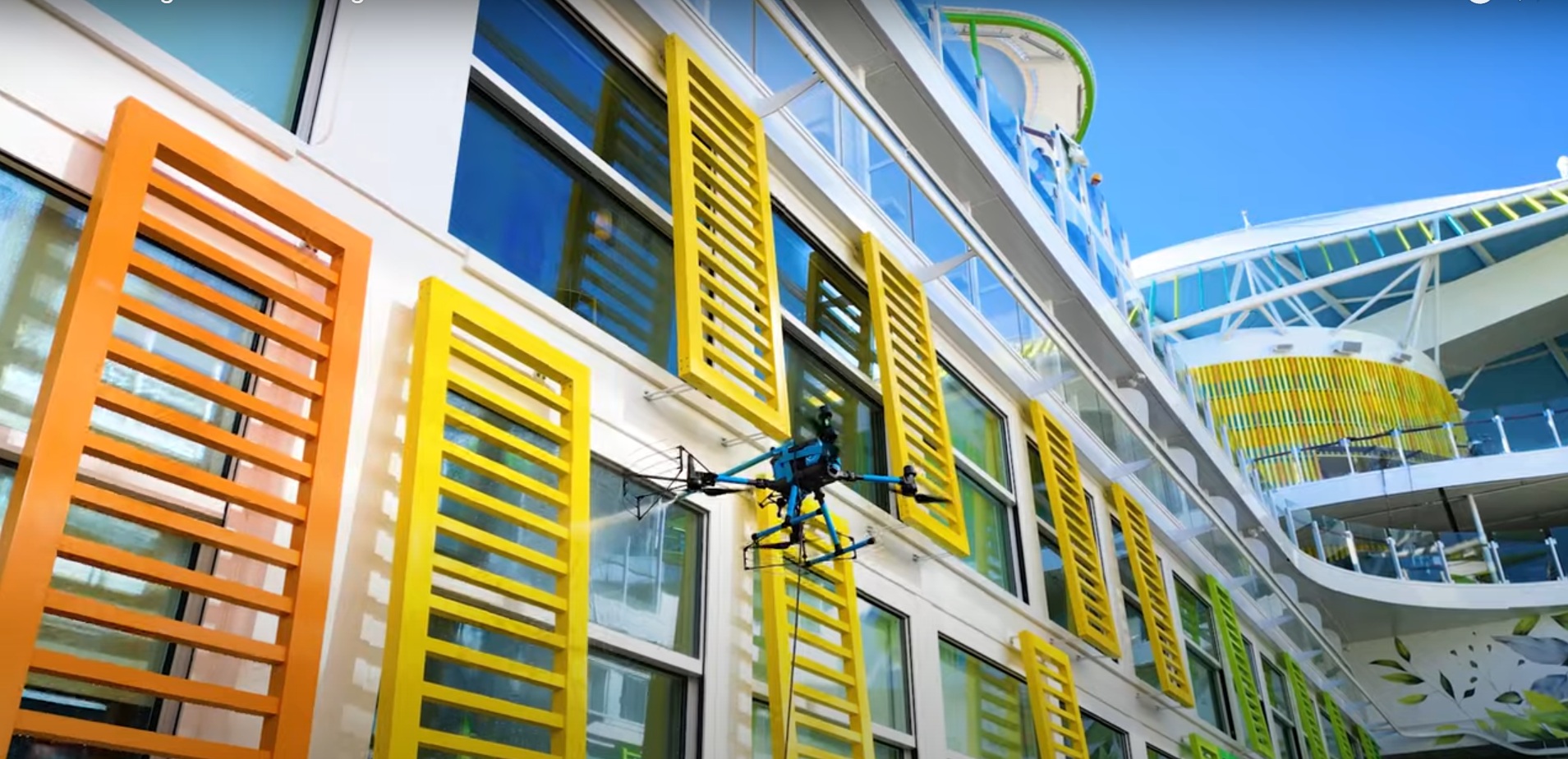
A governed cleaning workflow tailored to the building, surface and operating environment.
Hover, focus or tap a stage to examine its role in the HiiLSE end-to-end solution.
Drone cleaning is a coordinated technical operation. HiiLSE combines site assessment, surface and access understanding, suitable water and cleaning-method selection, aircraft/spray configuration, standoff control, safety zoning, execution and evidence validation.
Roles vary by site and mission. HiiLSE structures the supporting team around aircraft safety, cleaning quality, surface suitability and site coordination.
Aircraft control, mission discipline and flight safety.
Maintains external situational awareness and supports the pilot.
Coordinates cleaning sequence, coverage and site requirements.
Confirms method suitability for the actual surface and contamination.
Confirms water and cleaning-agent suitability where a cleaning agent is required.
Controls exclusion zones, PPE and ground-side safety.
Coordinates access, work zones, timing and acceptance evidence.
Cleaning method selection must be matched to the actual surface, contamination, access conditions and client requirements. Water quality and any cleaning agent are confirmed for the specific job rather than assumed from a generic recipe.

Material, finish, contamination, access and sensitive areas are assessed before operation.

Water and, where required, cleaning-agent suitability are confirmed for the actual surface and mission.

Payload, hose/tether behaviour, spray pattern, endurance and ground support are configured for the site.

Altitude, approach corridor, proximity limits and exclusion zones support controlled operation near infrastructure.
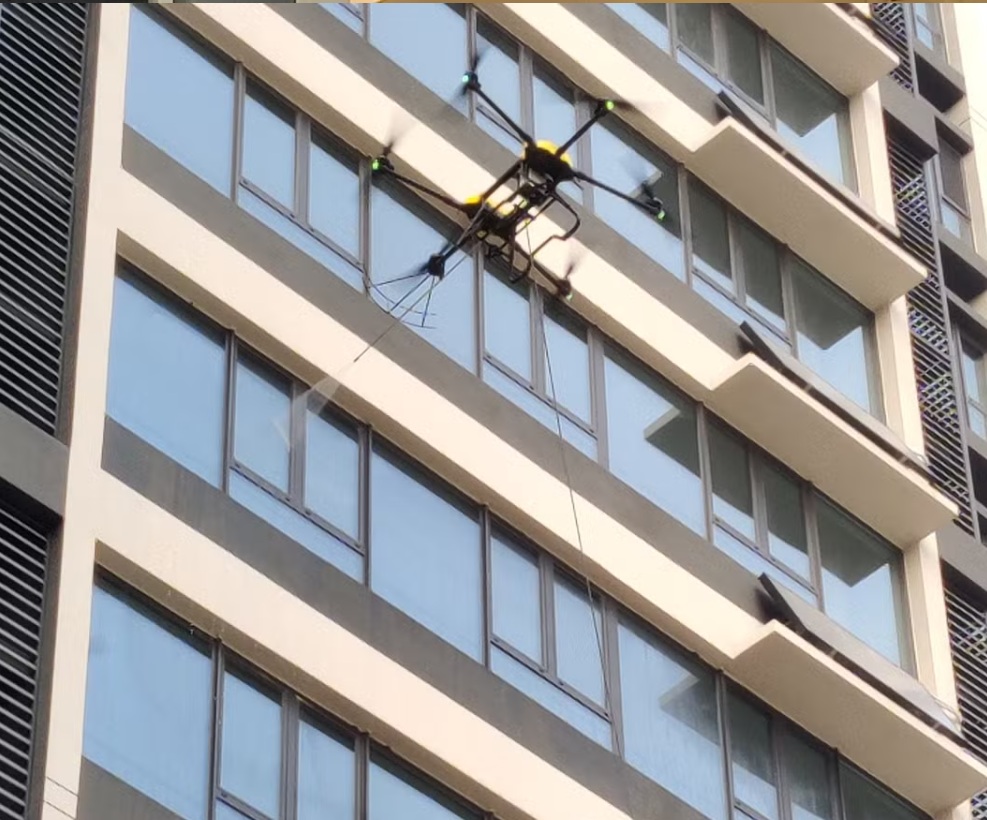
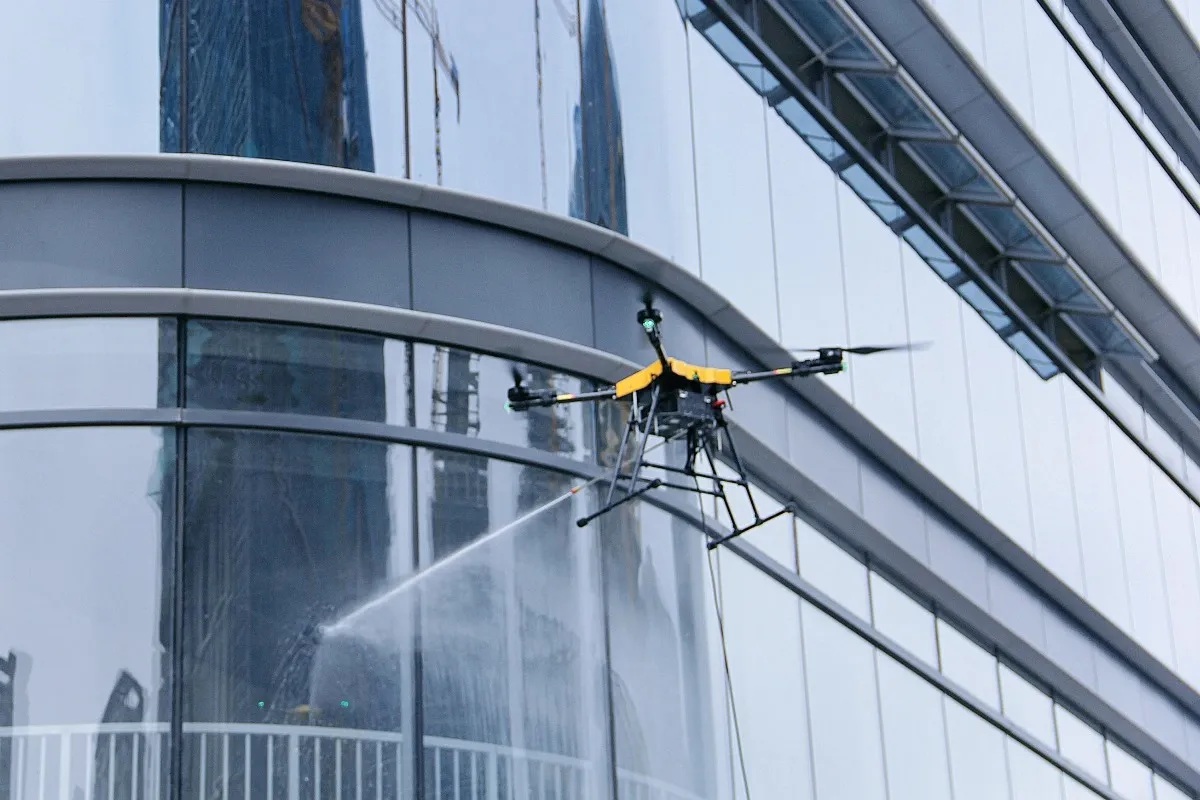
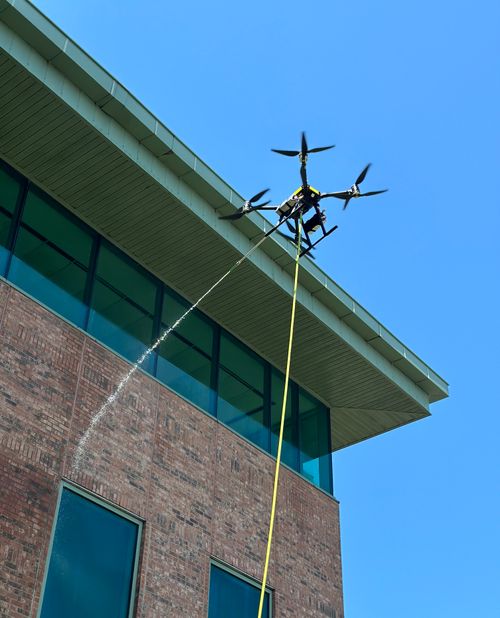
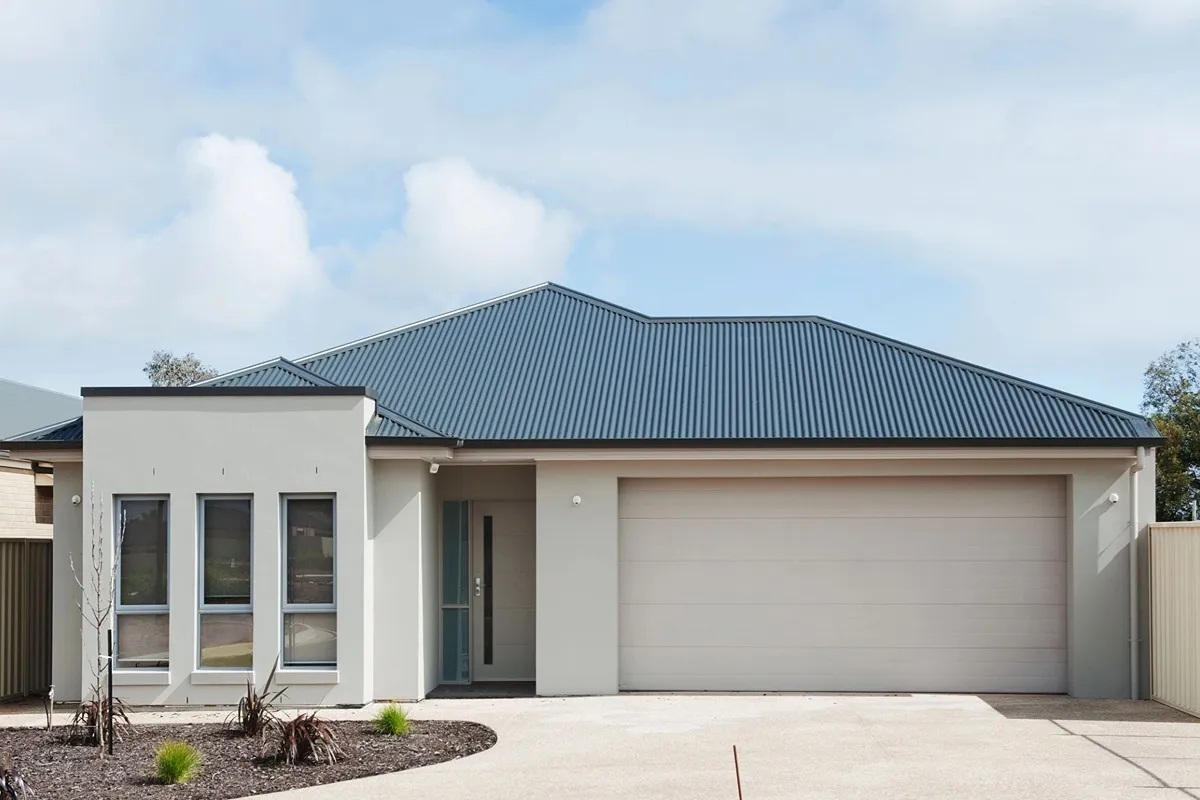
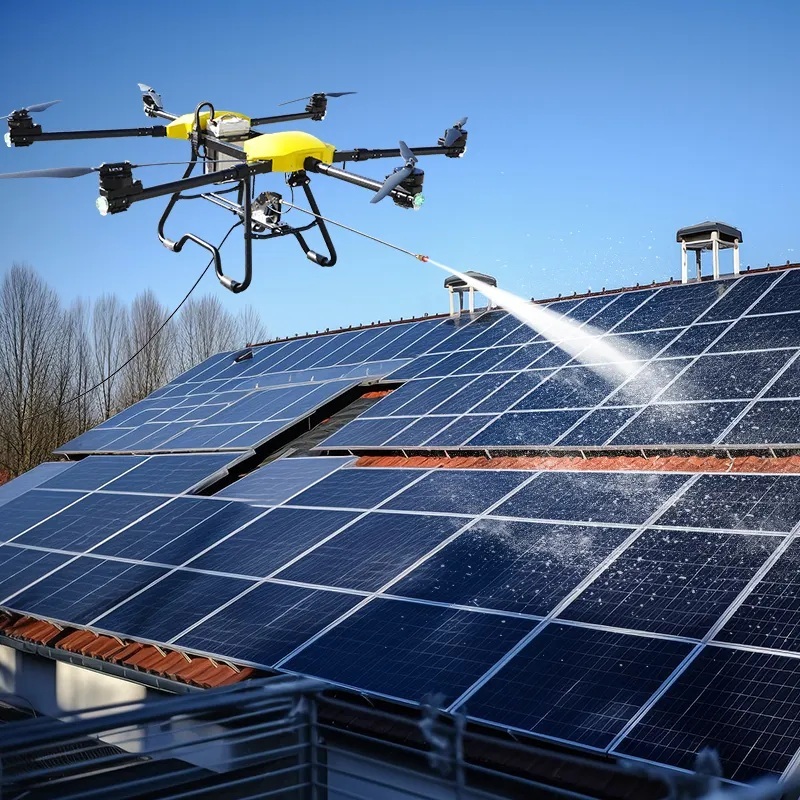
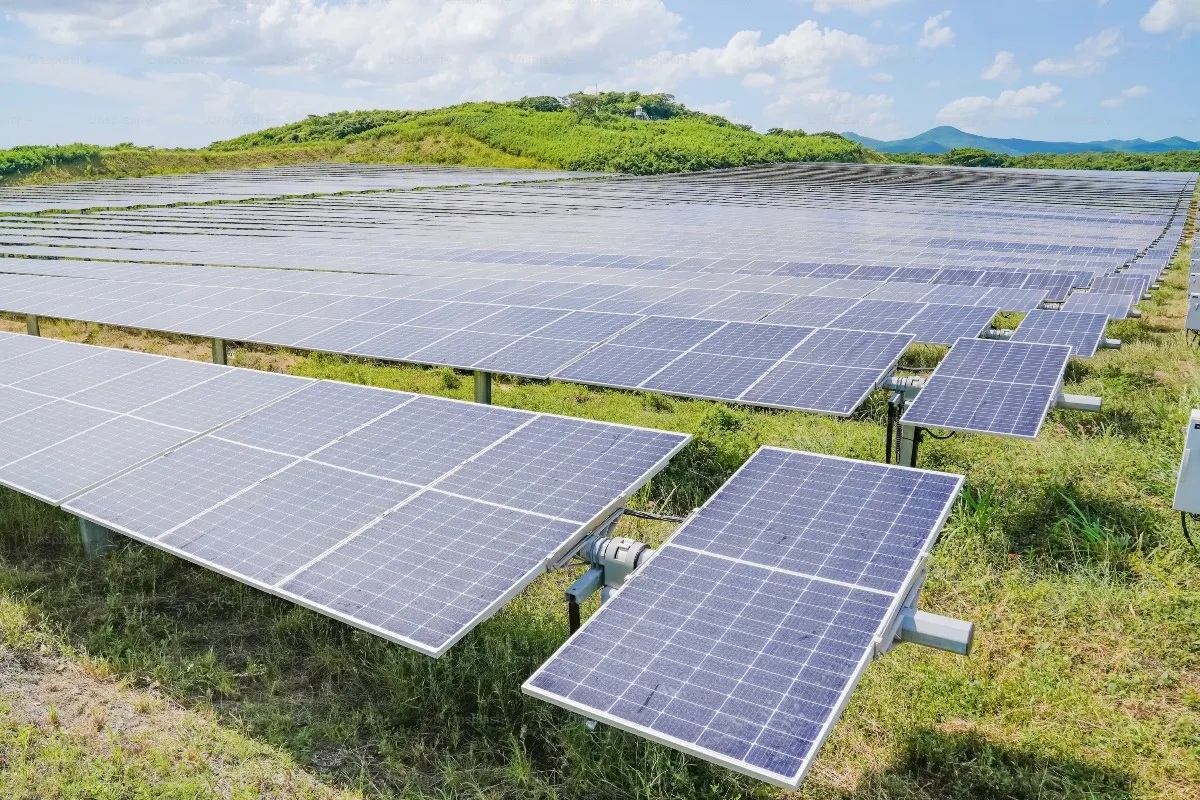
Approved HiiLSE project photography is grouped by actual site and shown in a governed responsive gallery.
Industrial / logistics facility · HiiLSE Drone cleaning project evidence
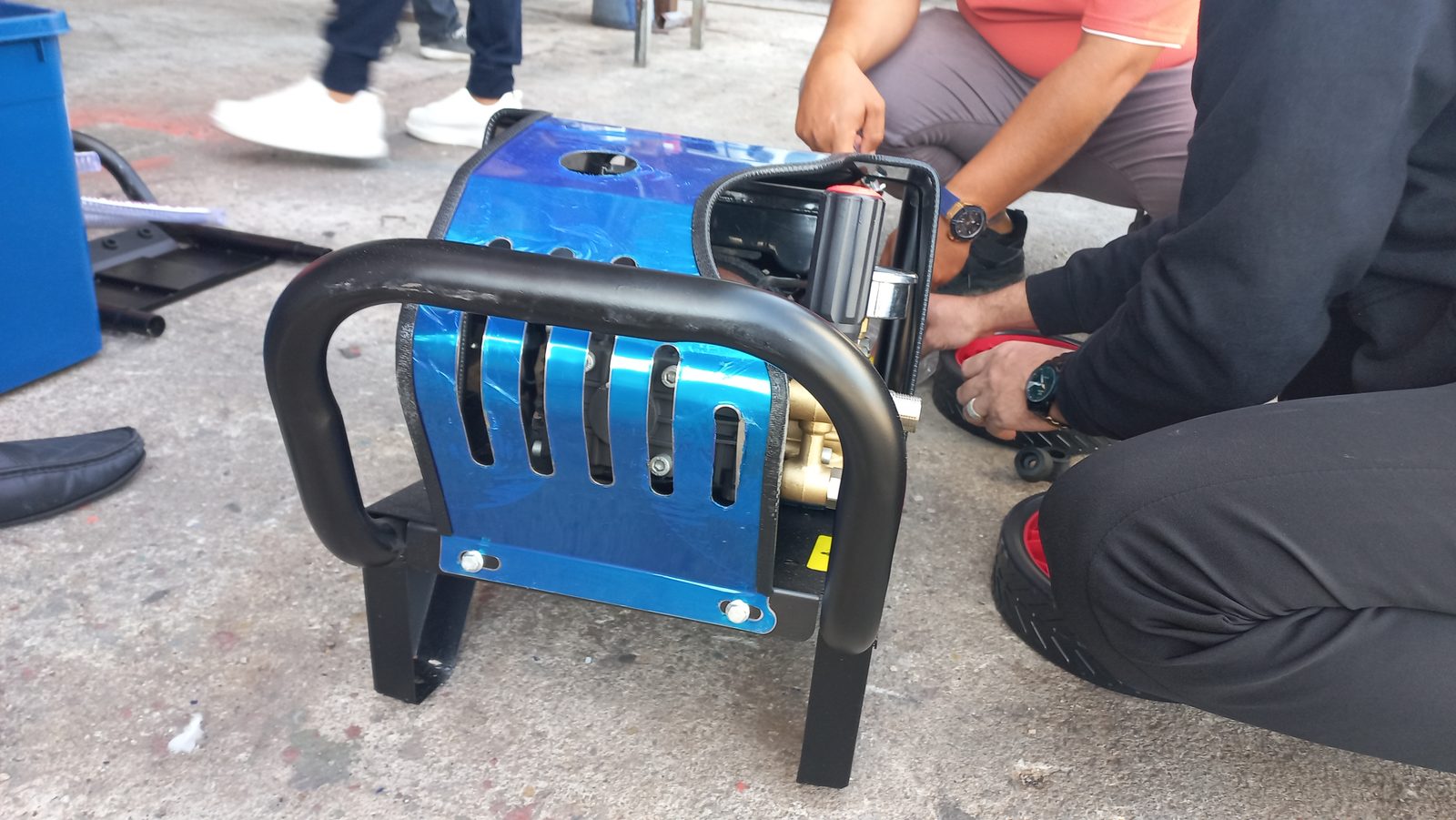
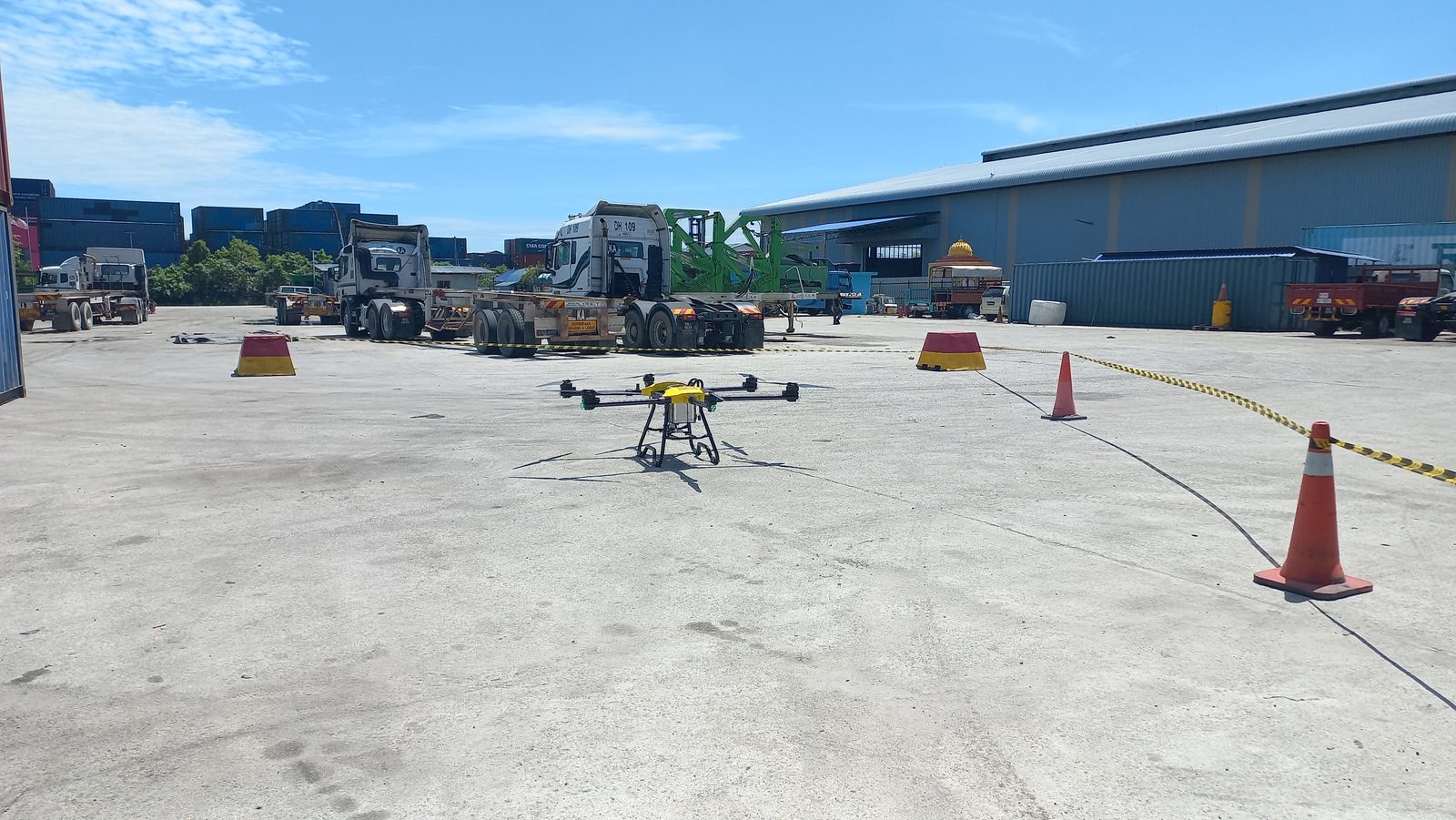
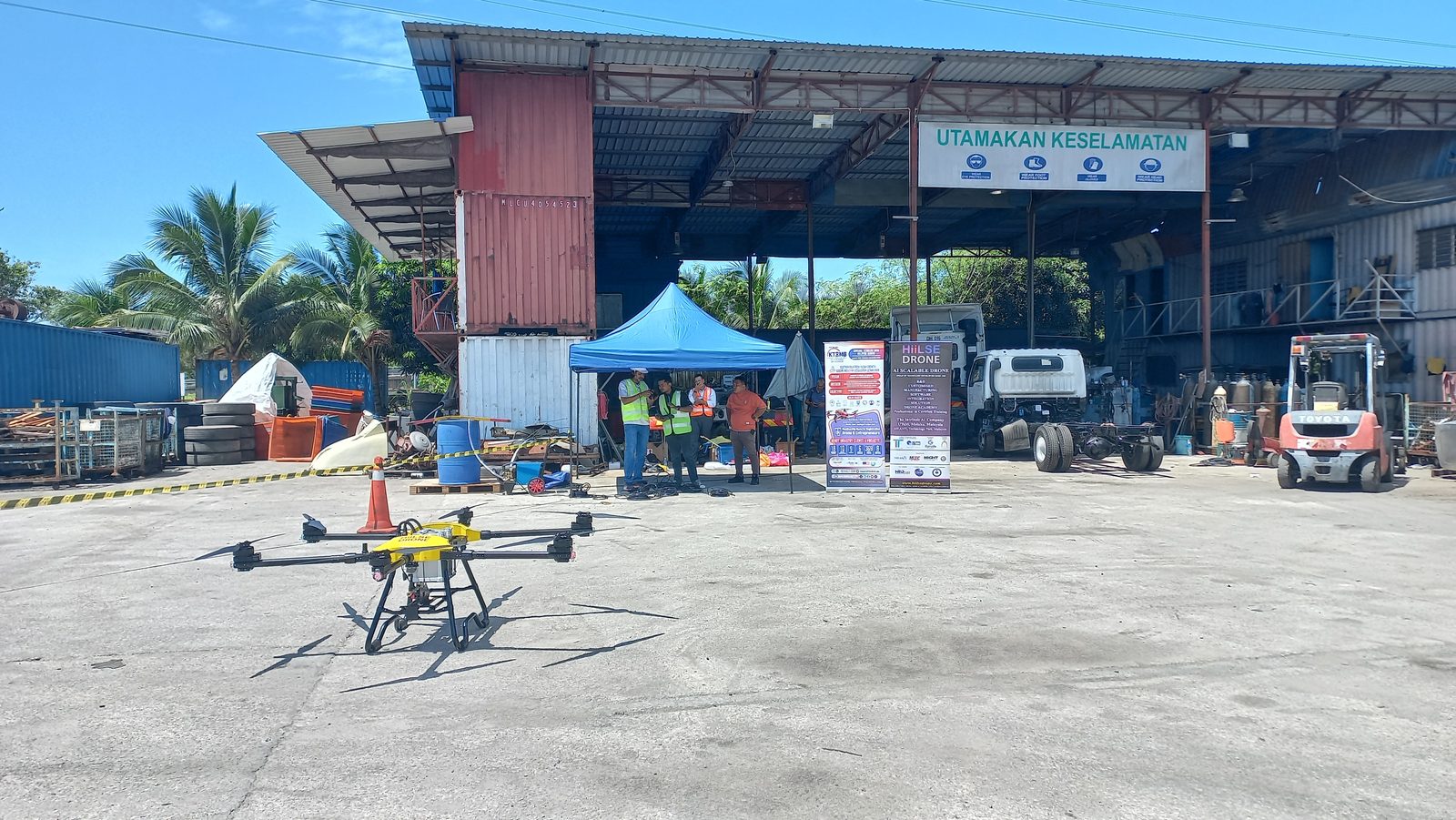
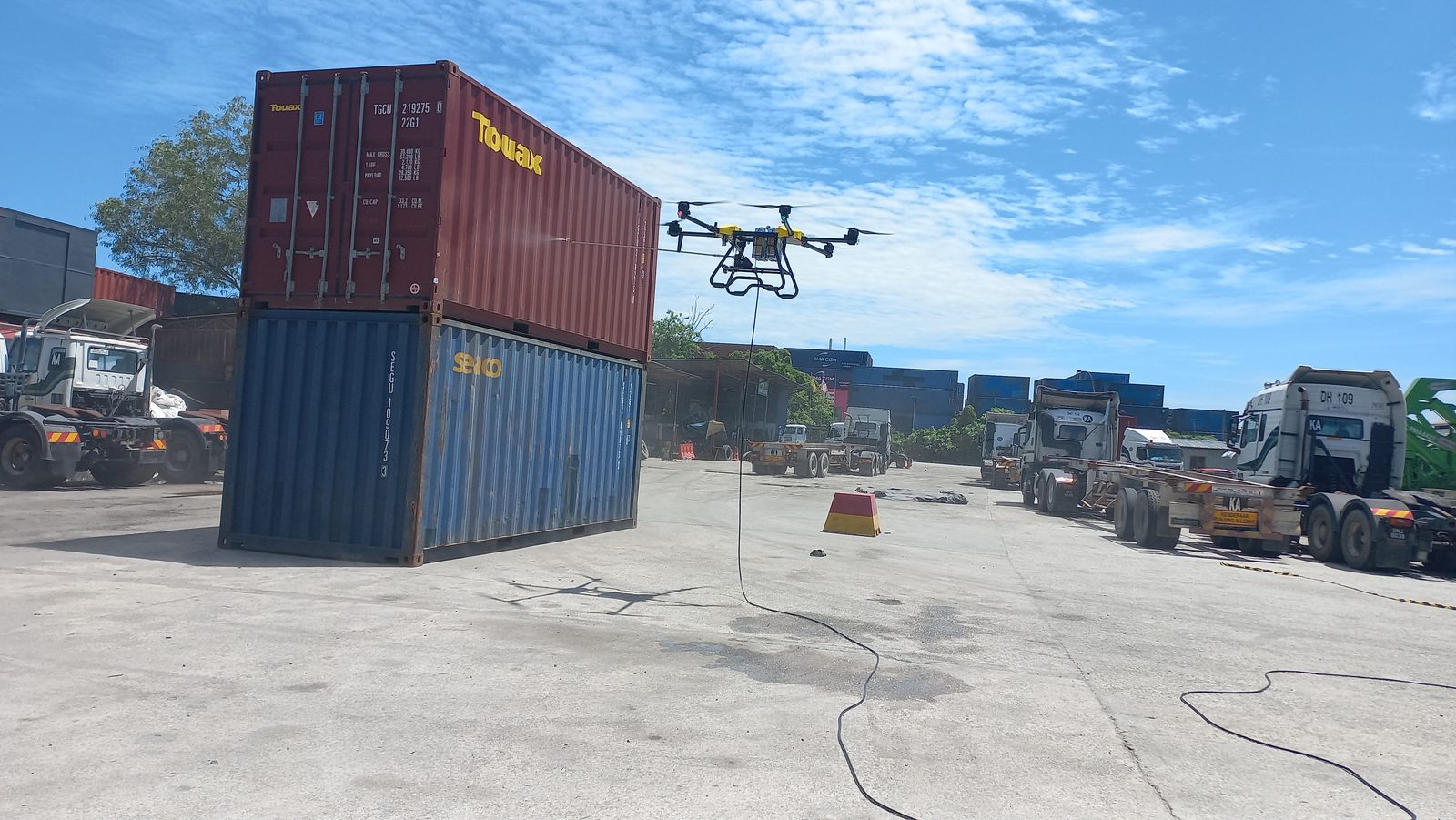
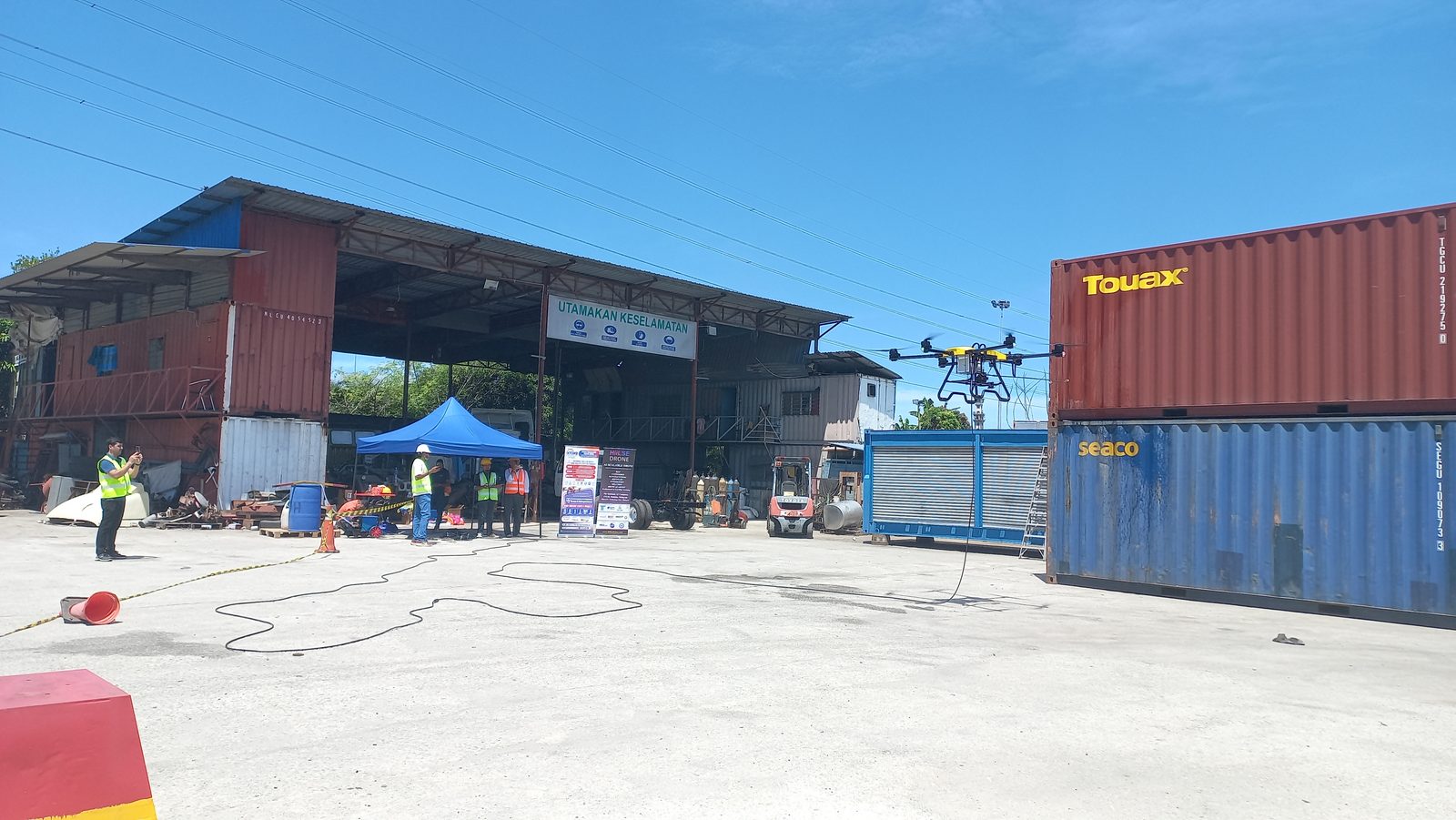
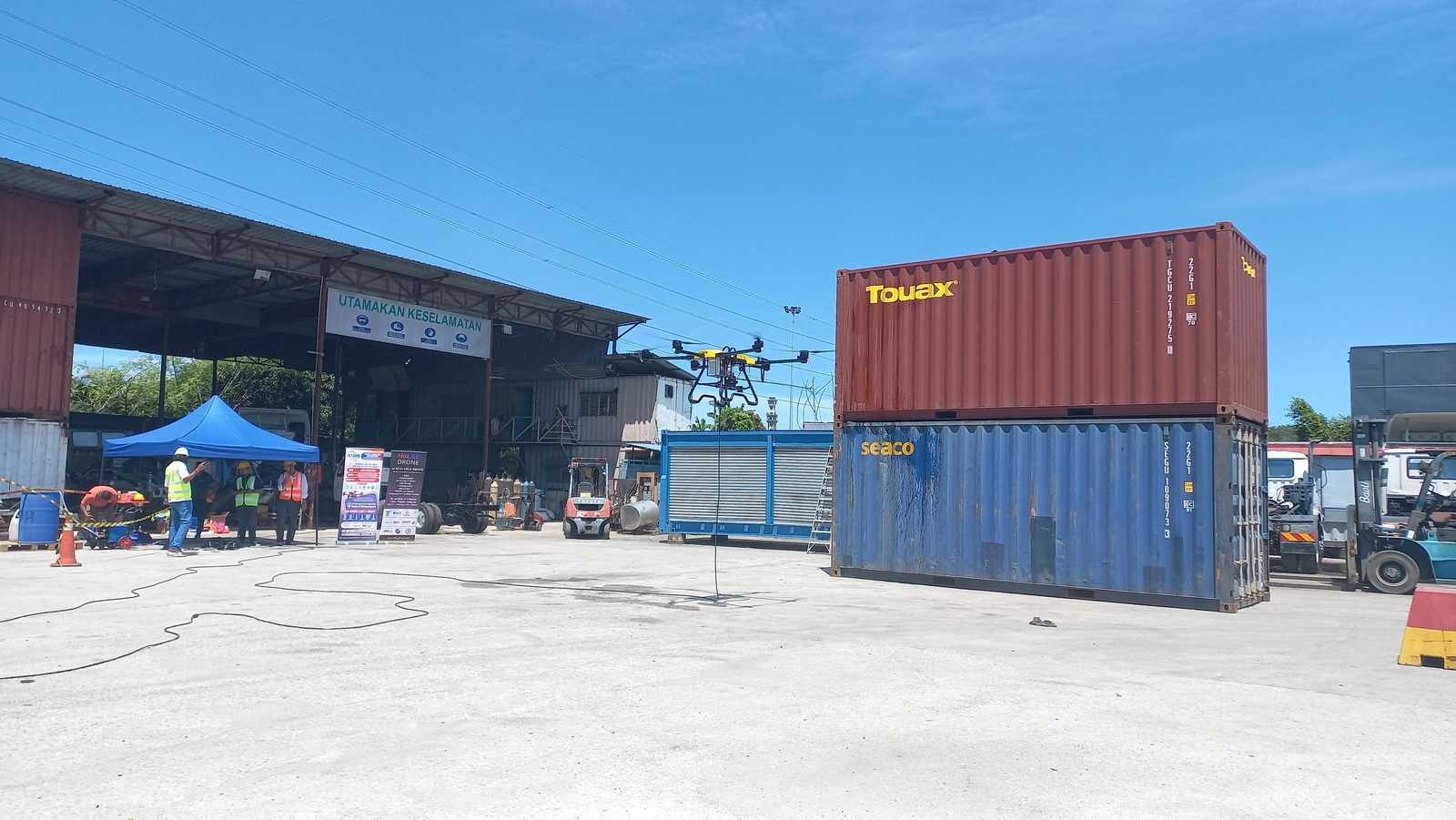
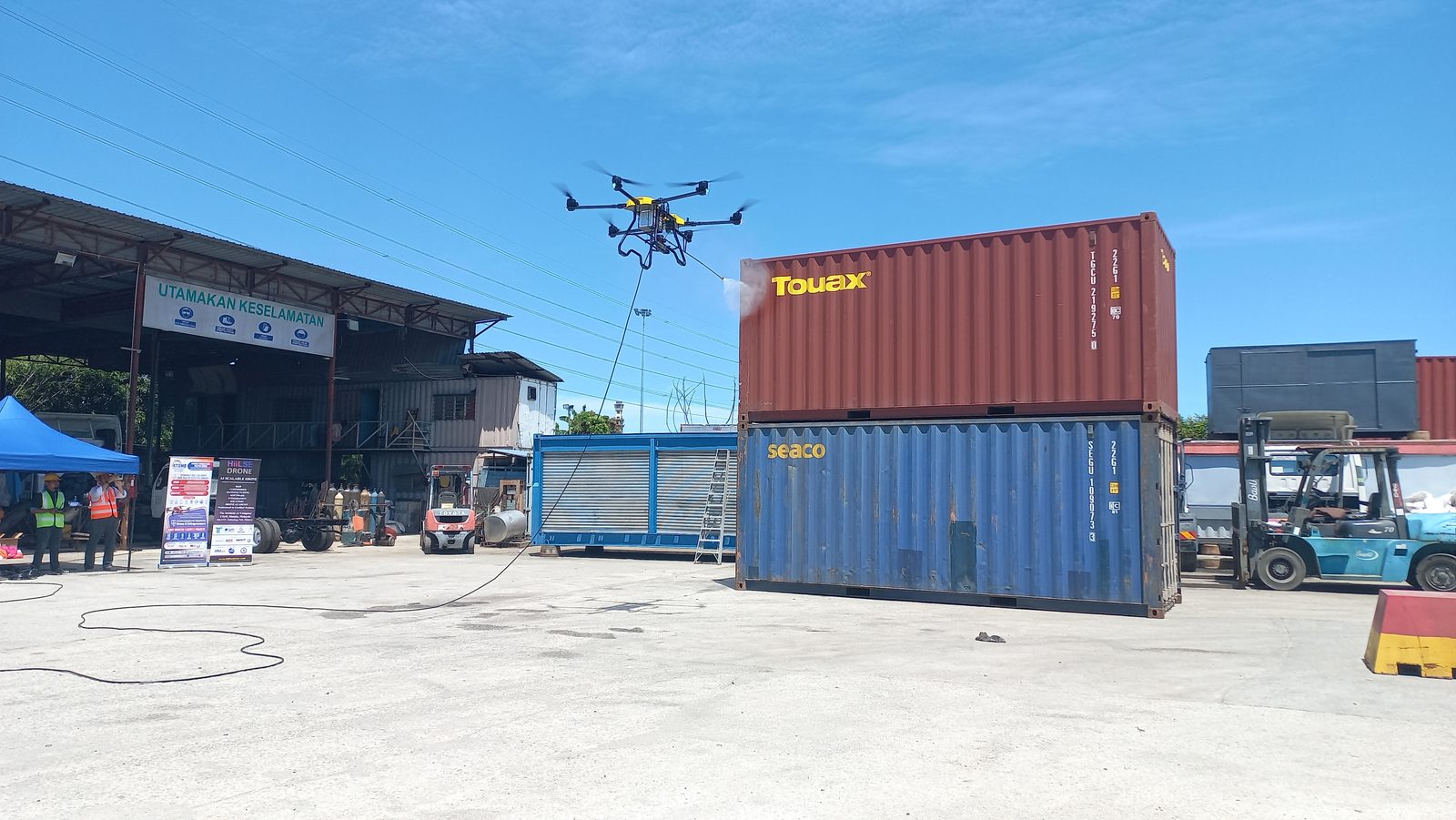
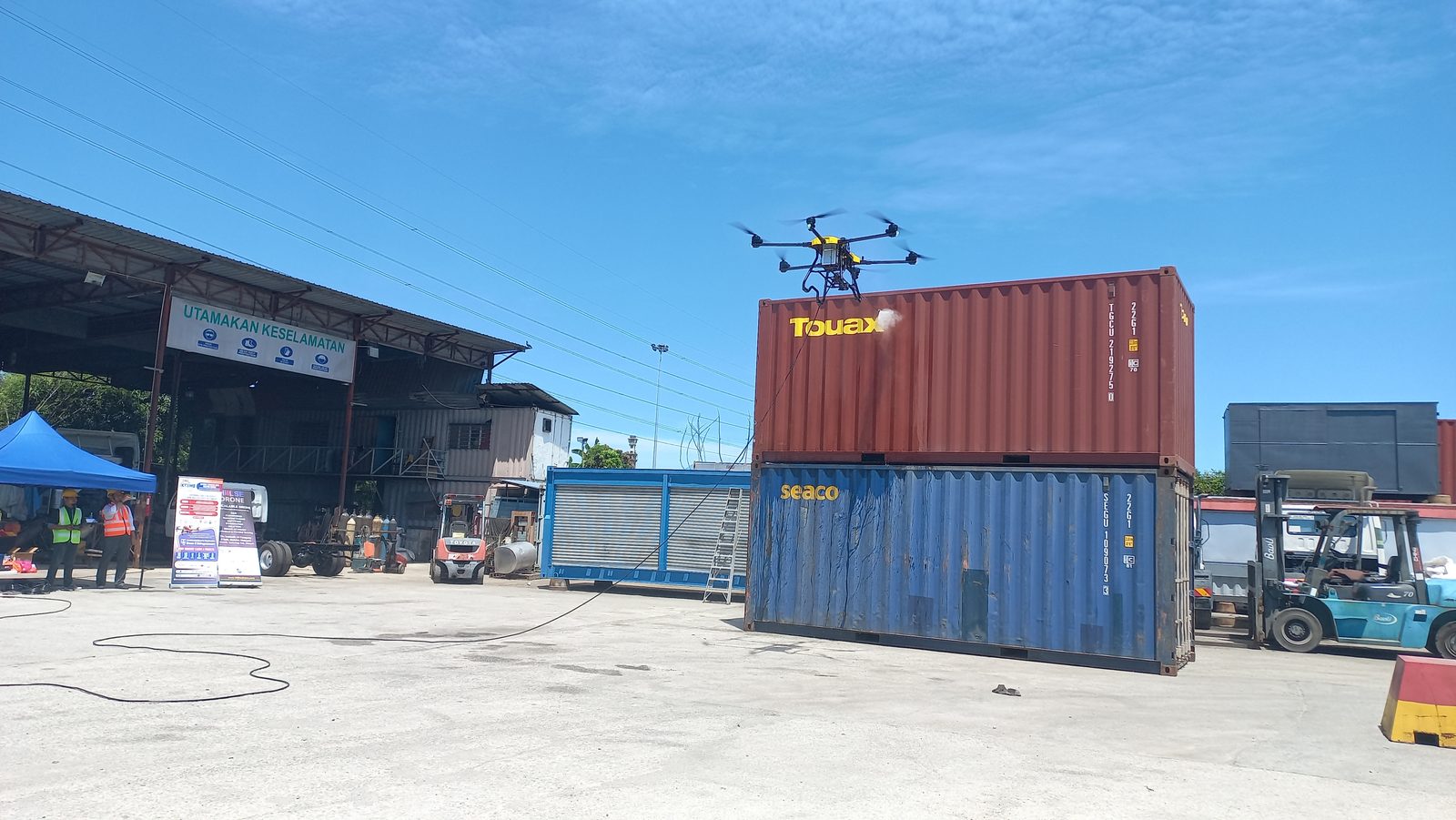
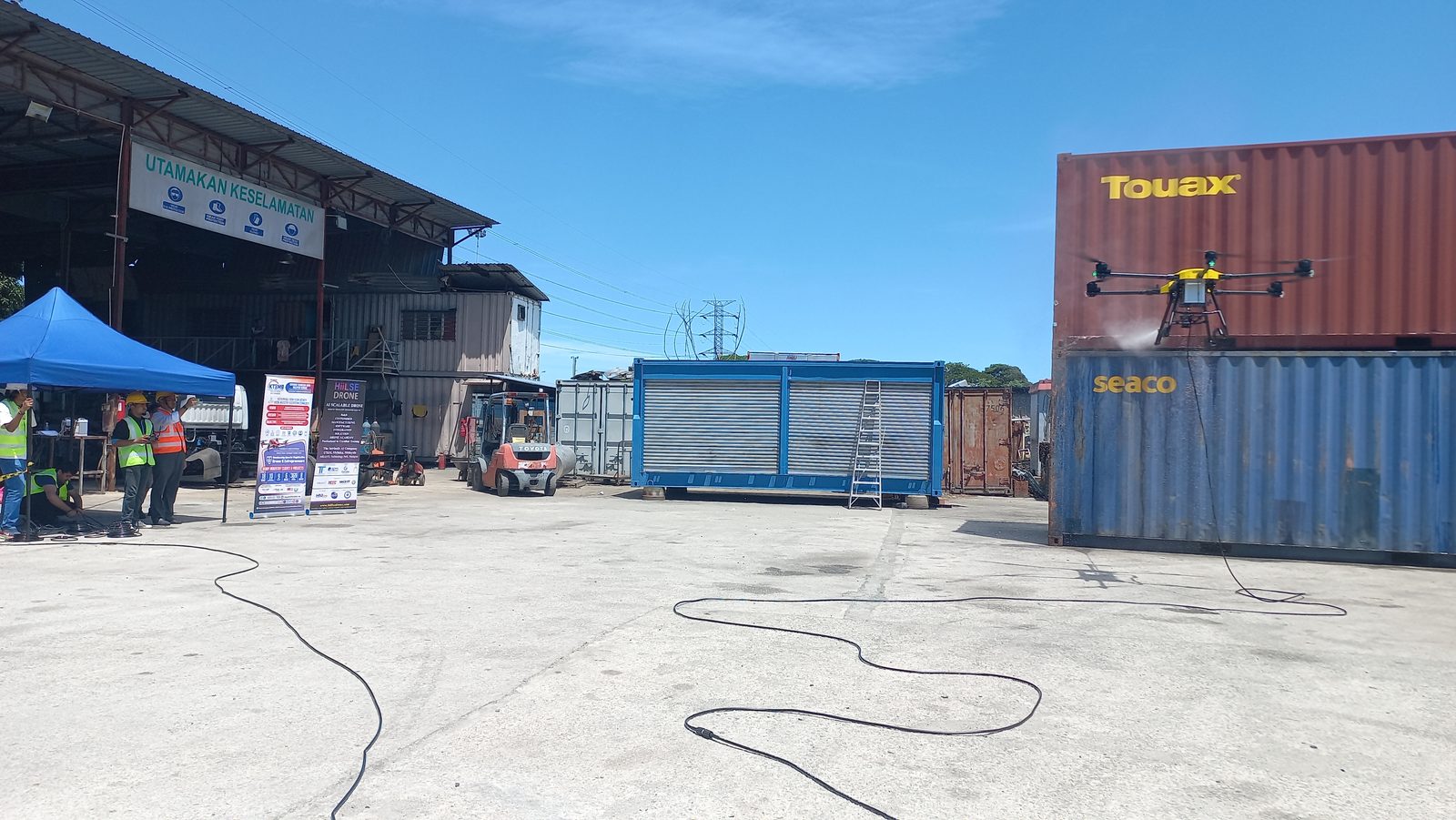
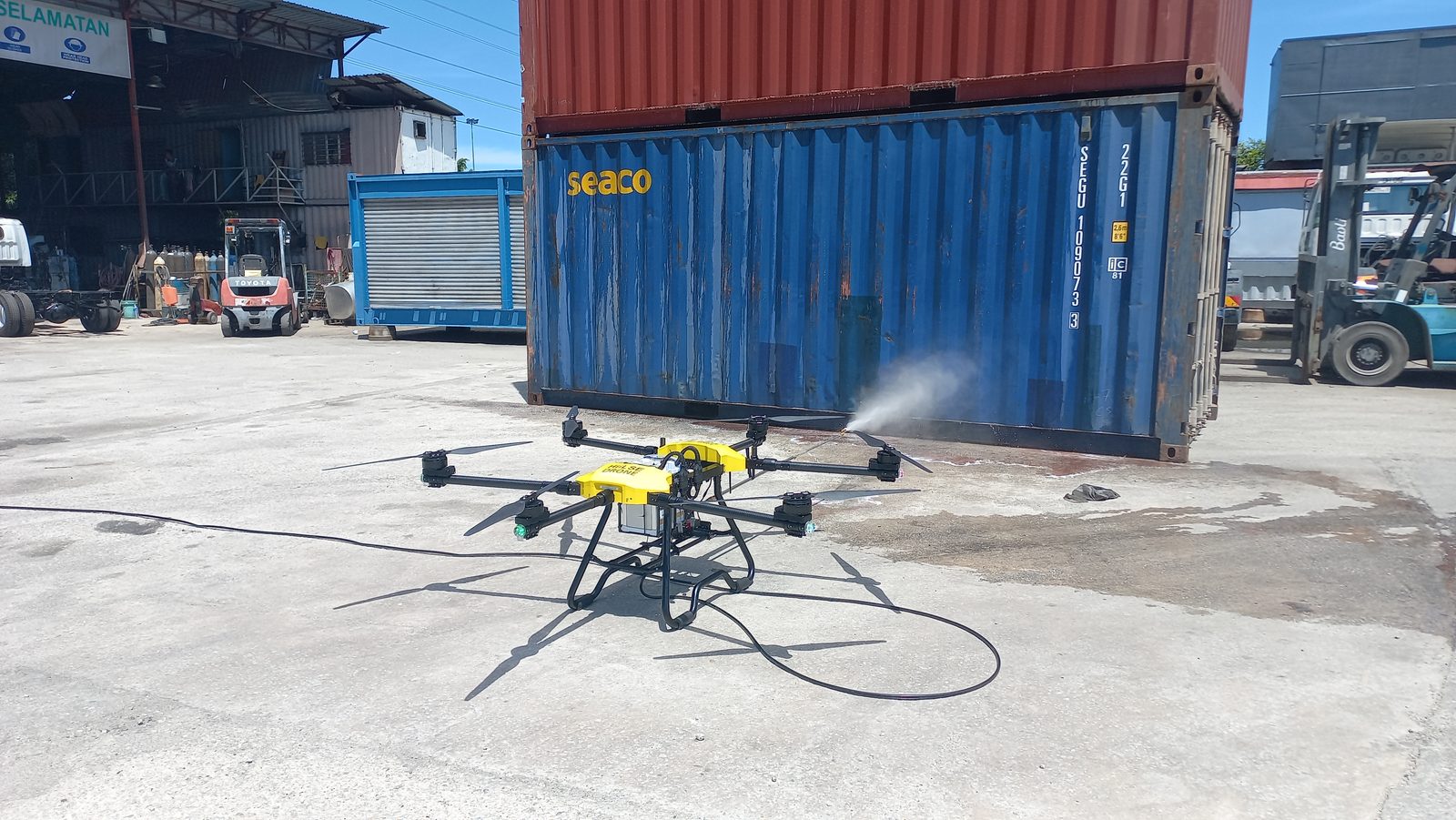
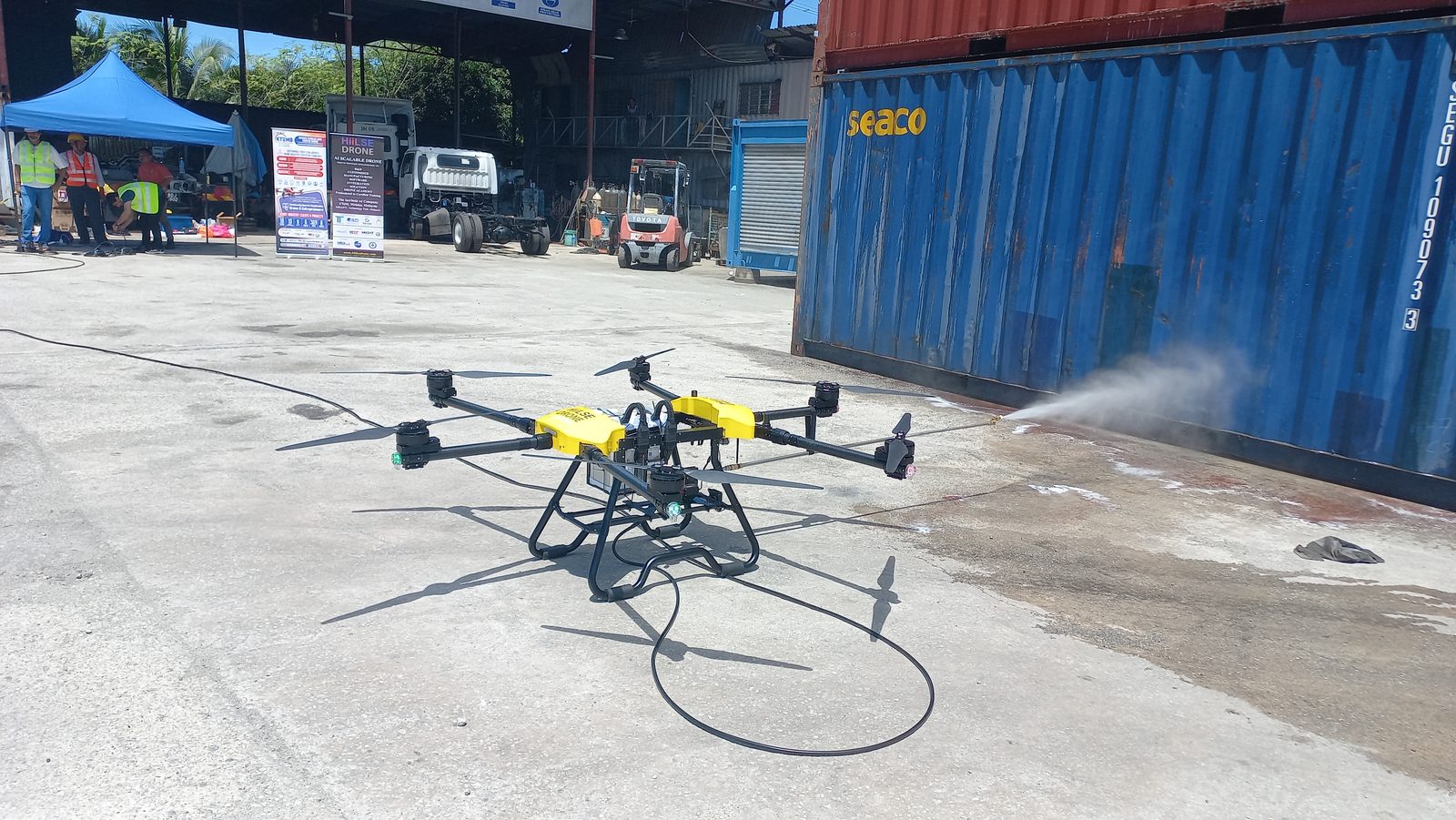
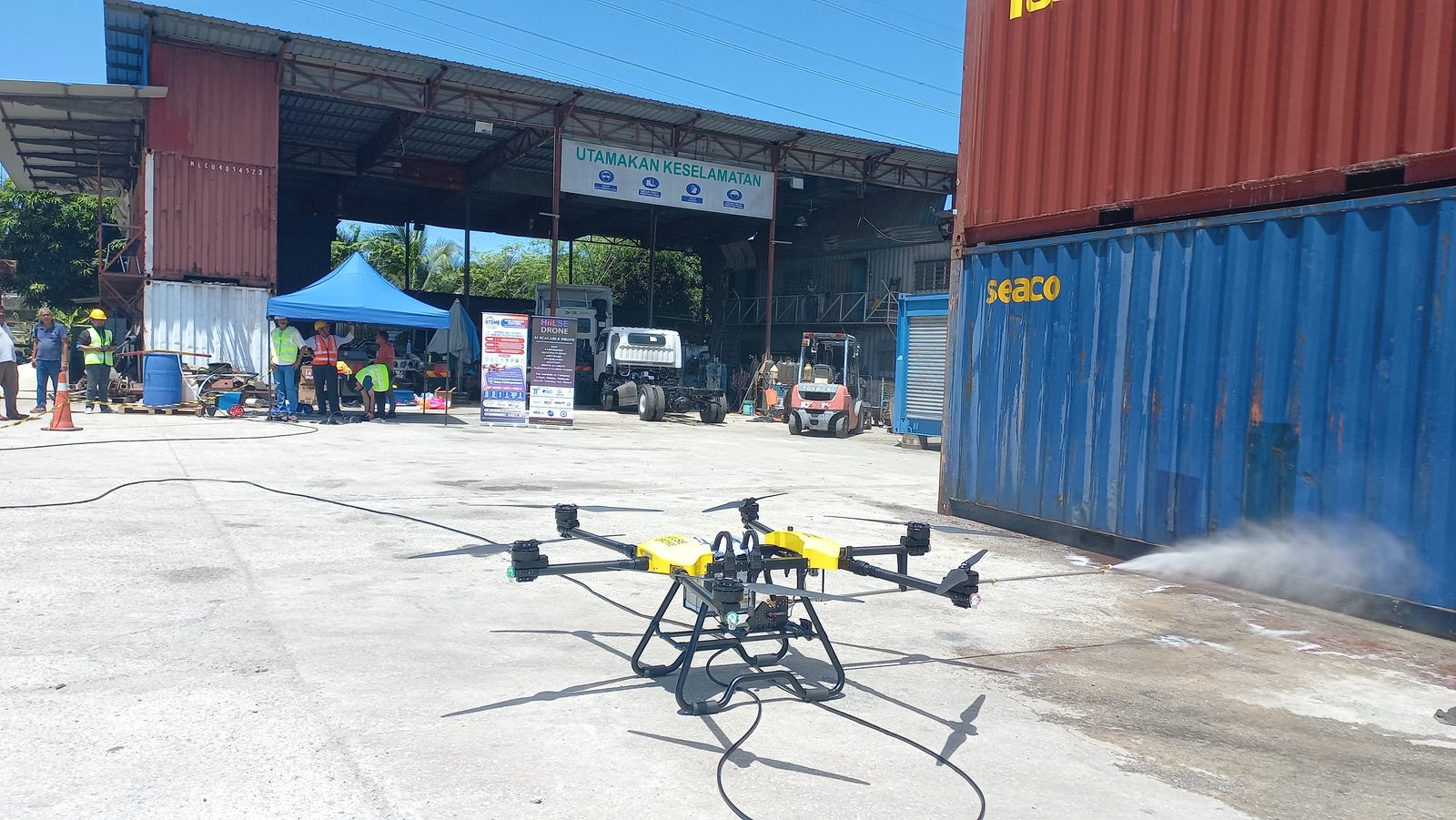
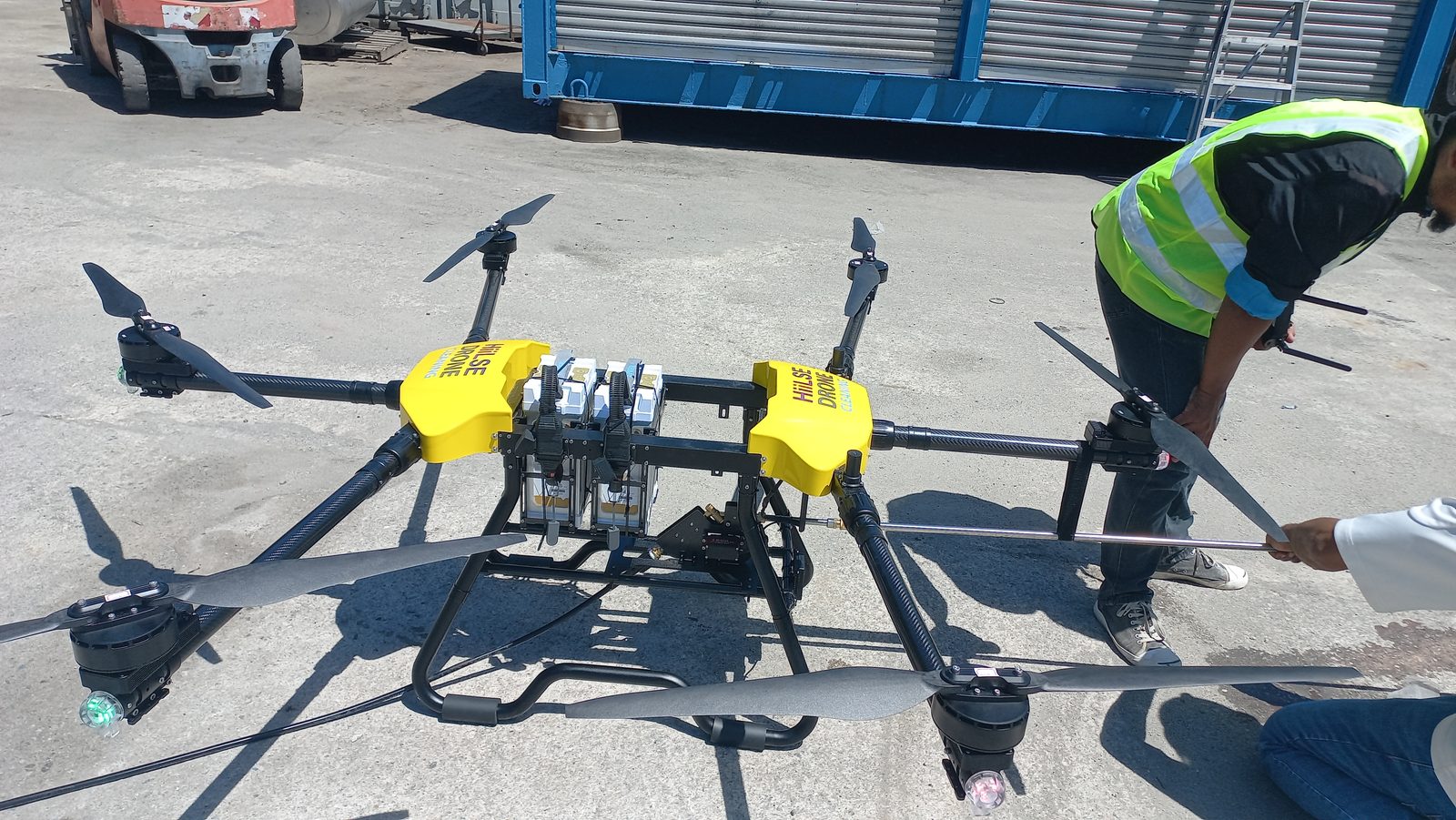
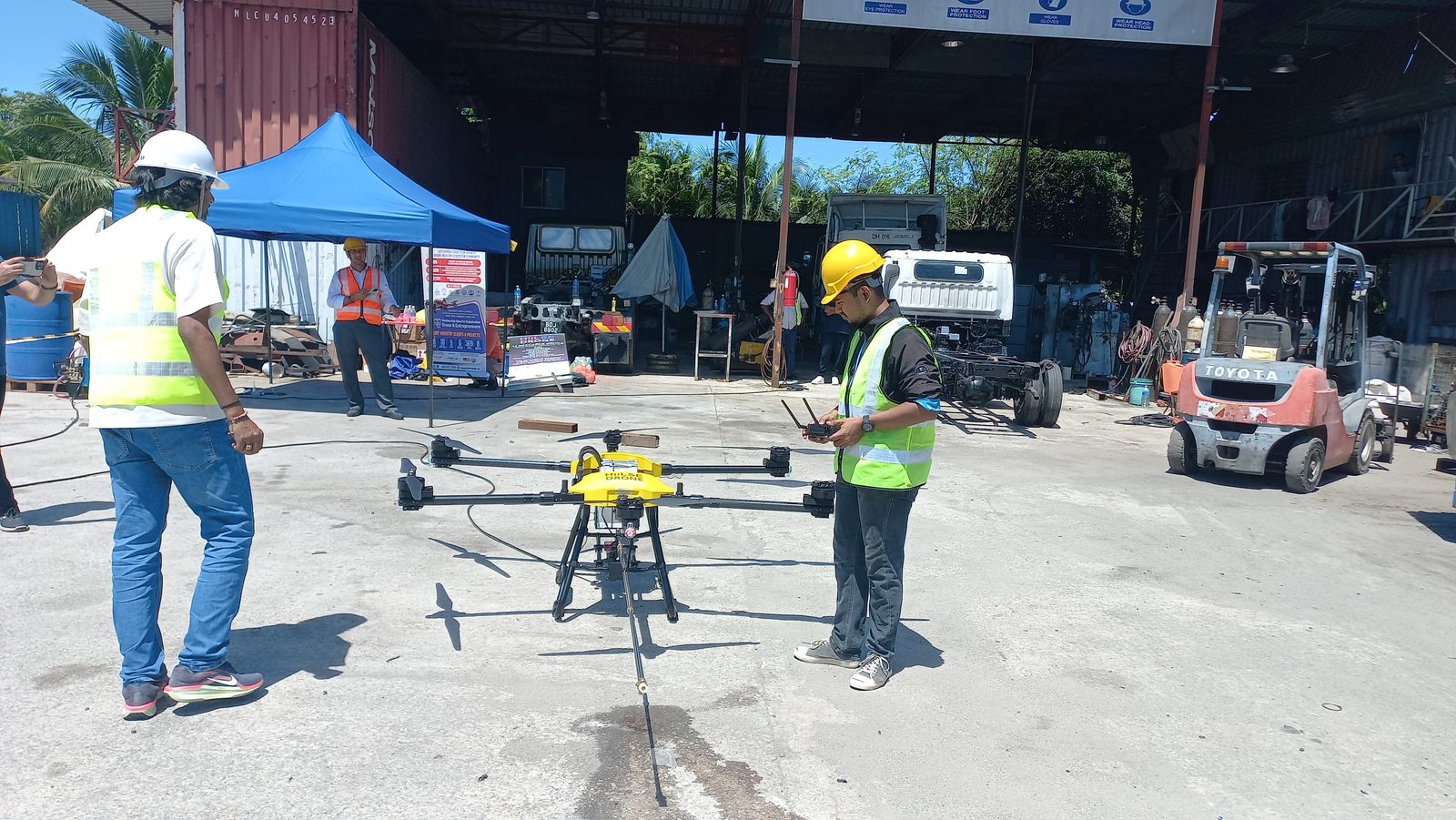
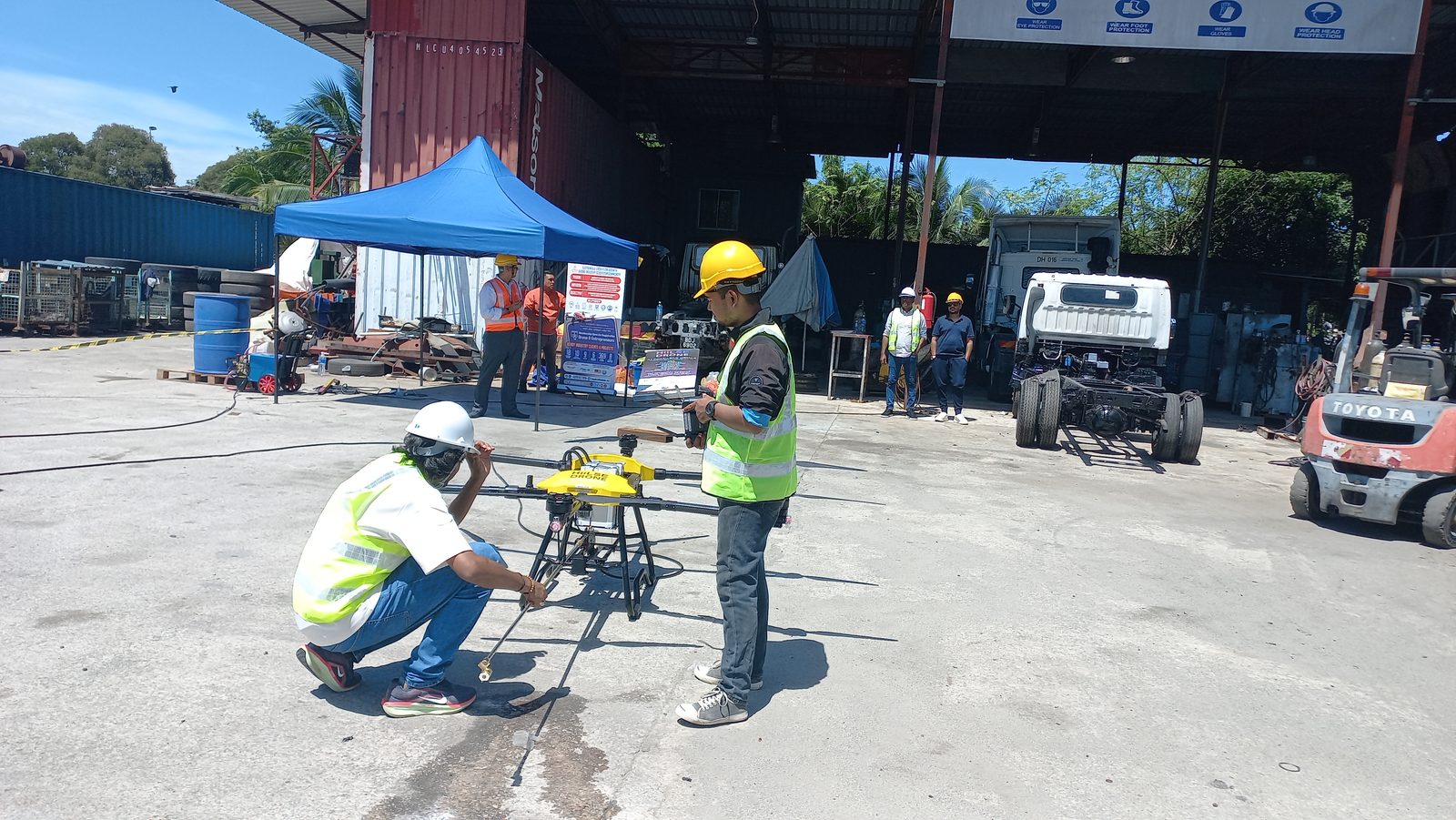
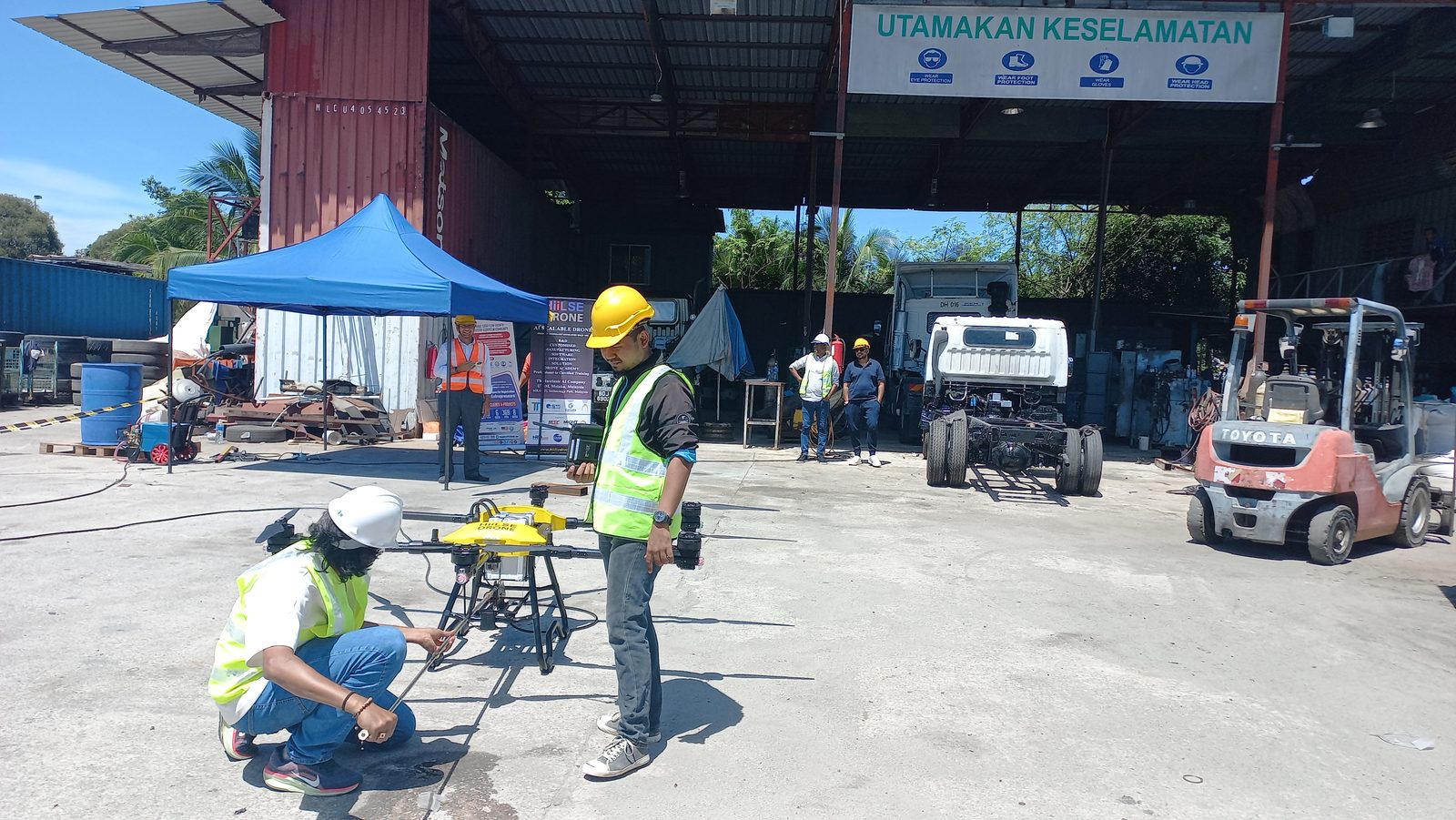
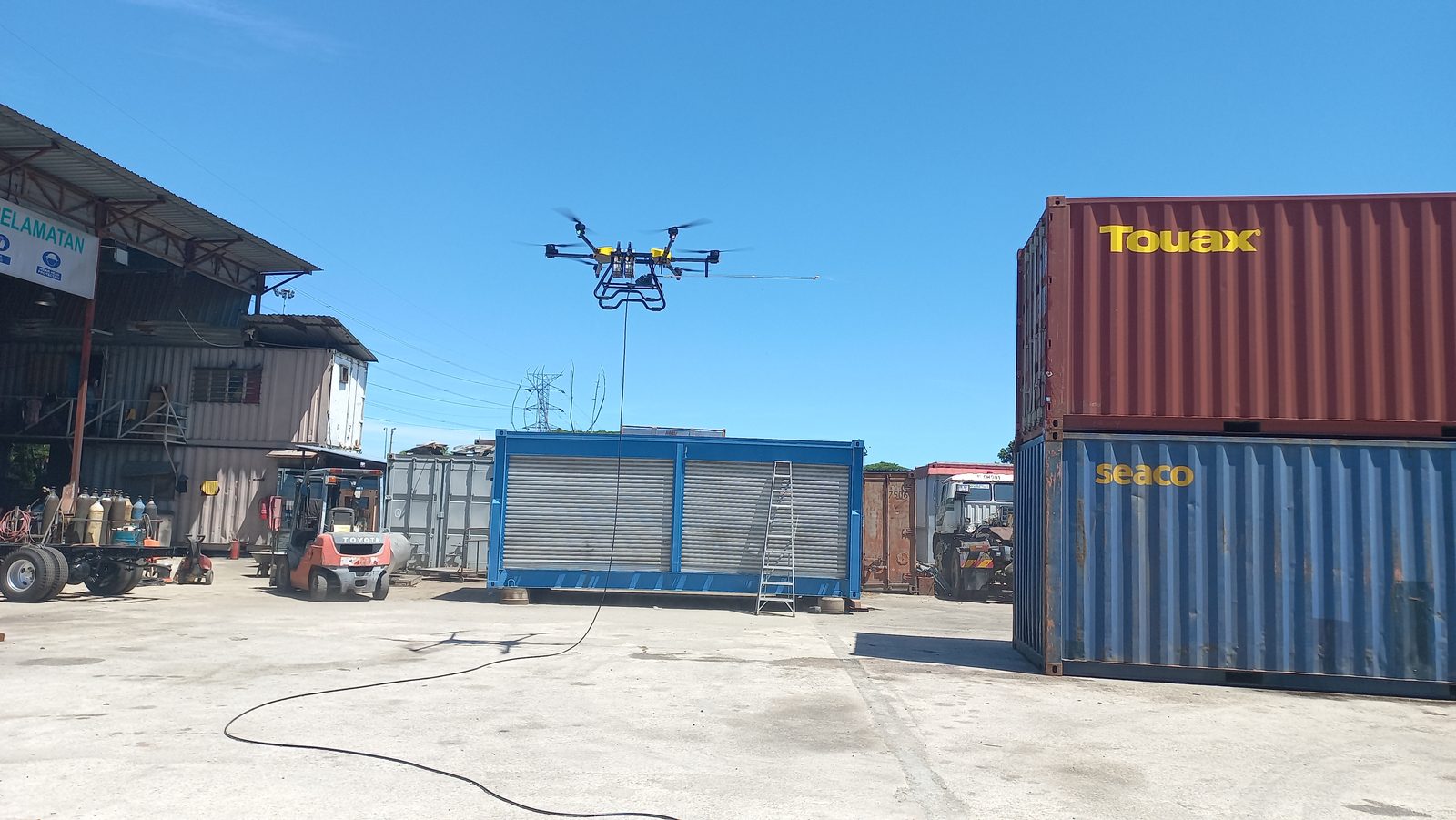
Warehouse / factory · HiiLSE Drone cleaning project evidence
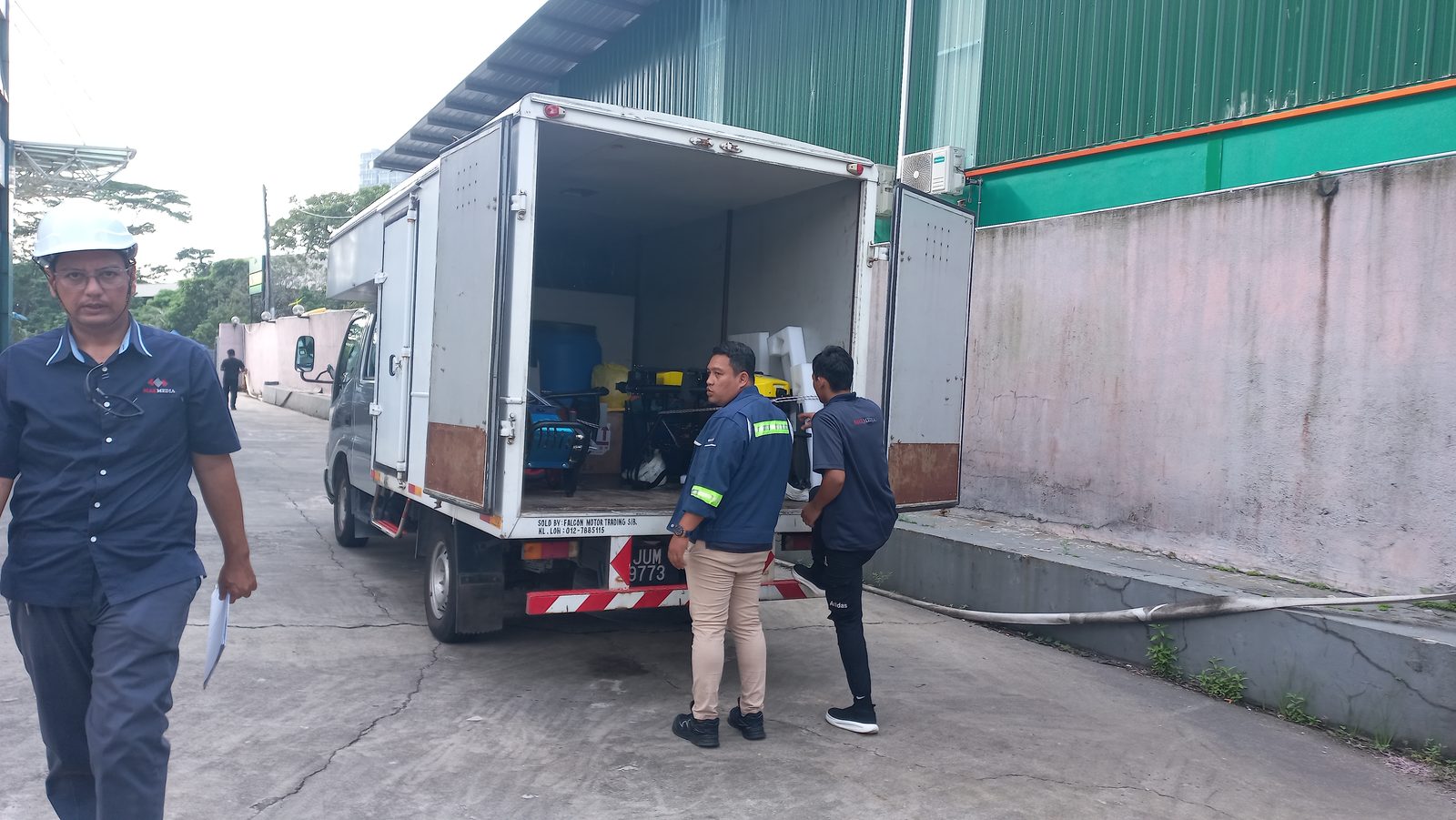
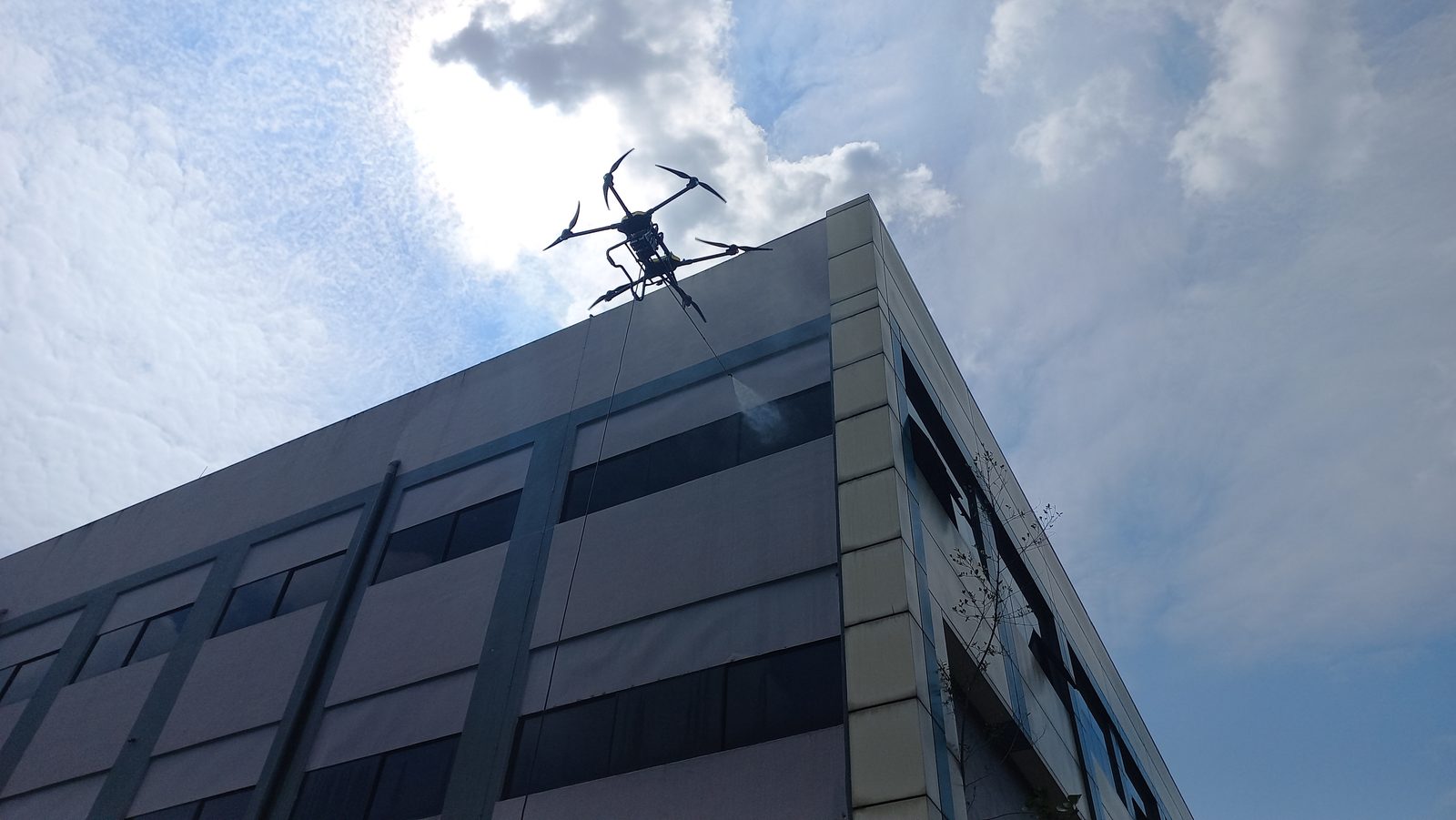
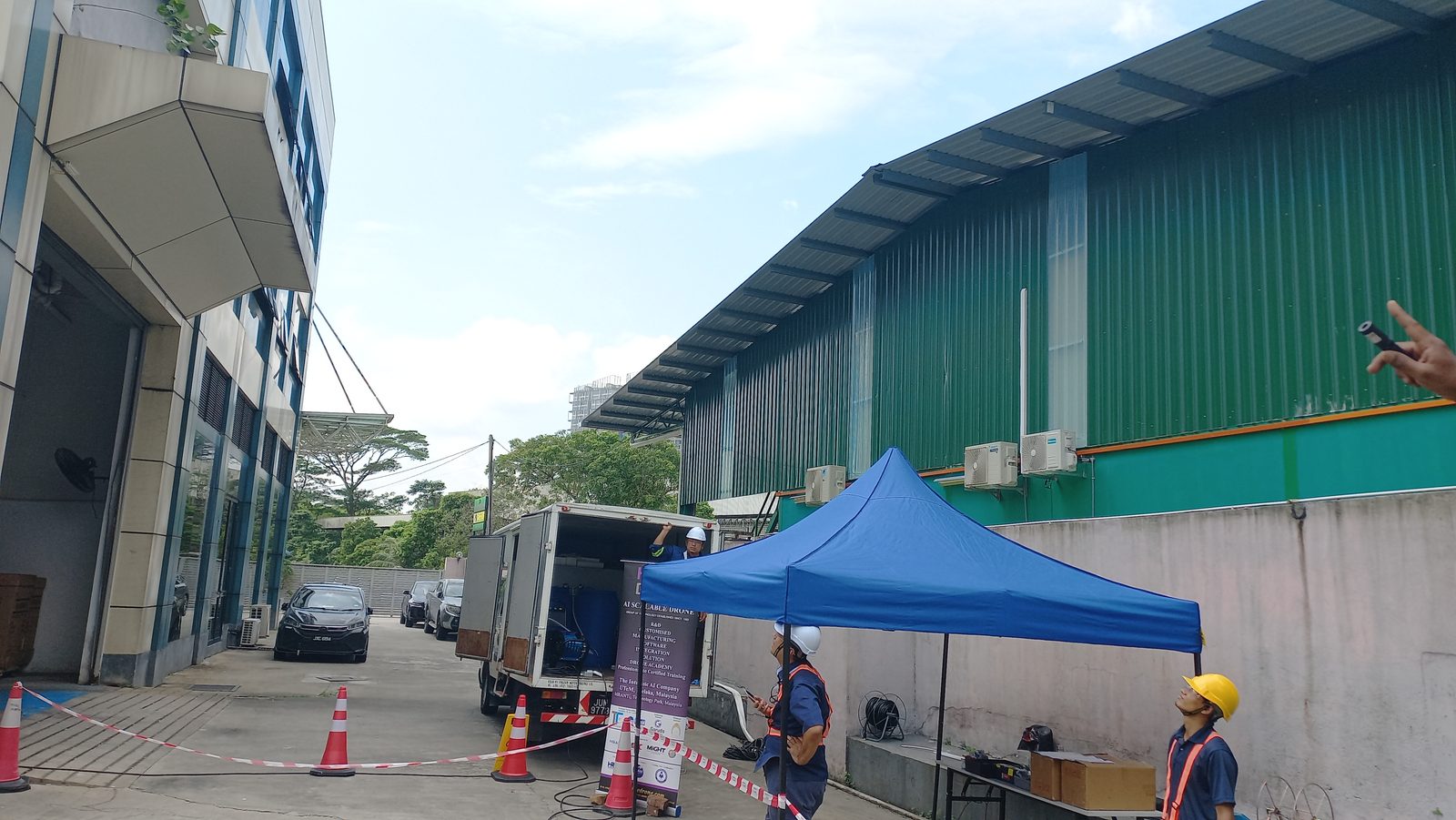
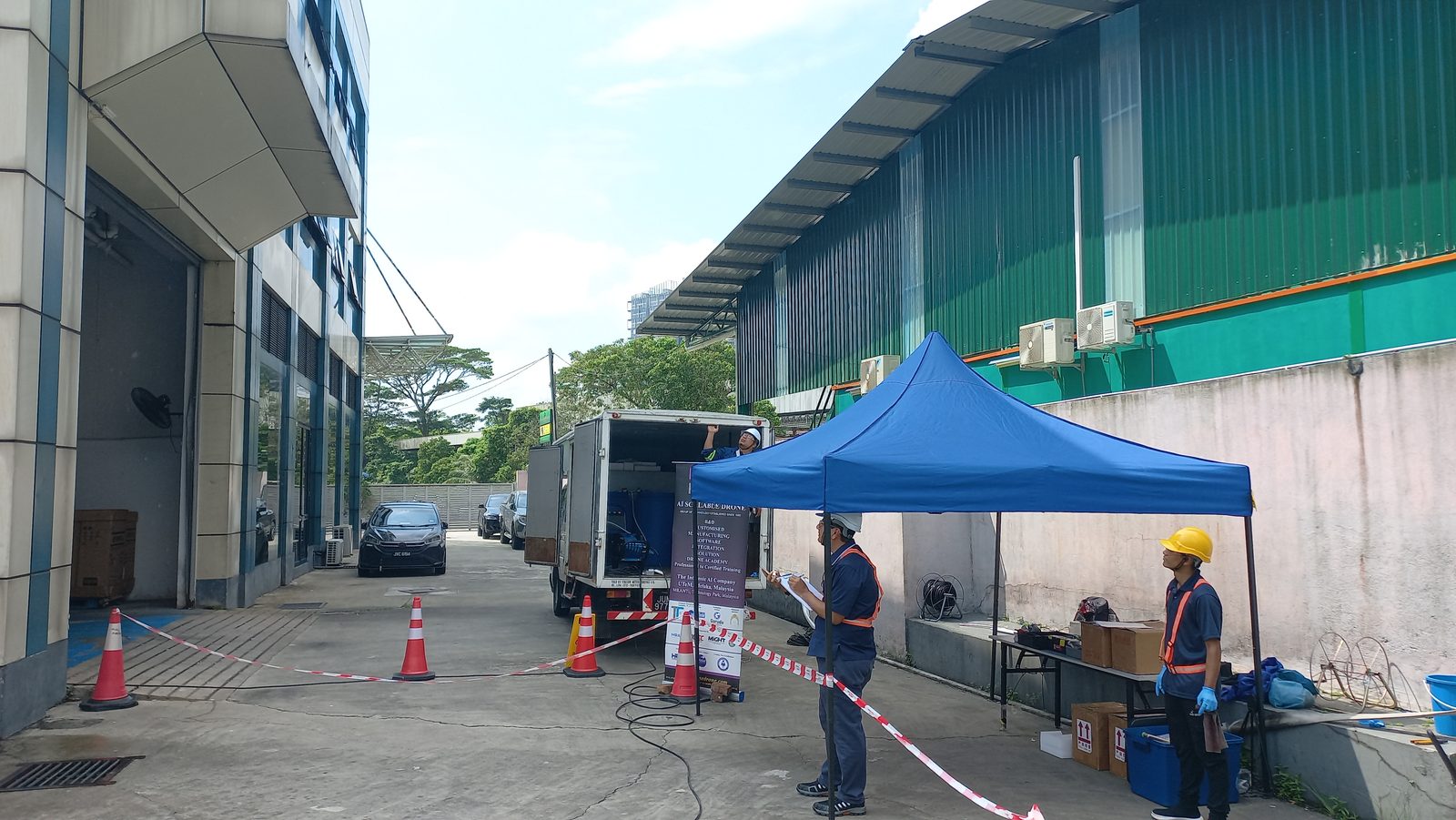
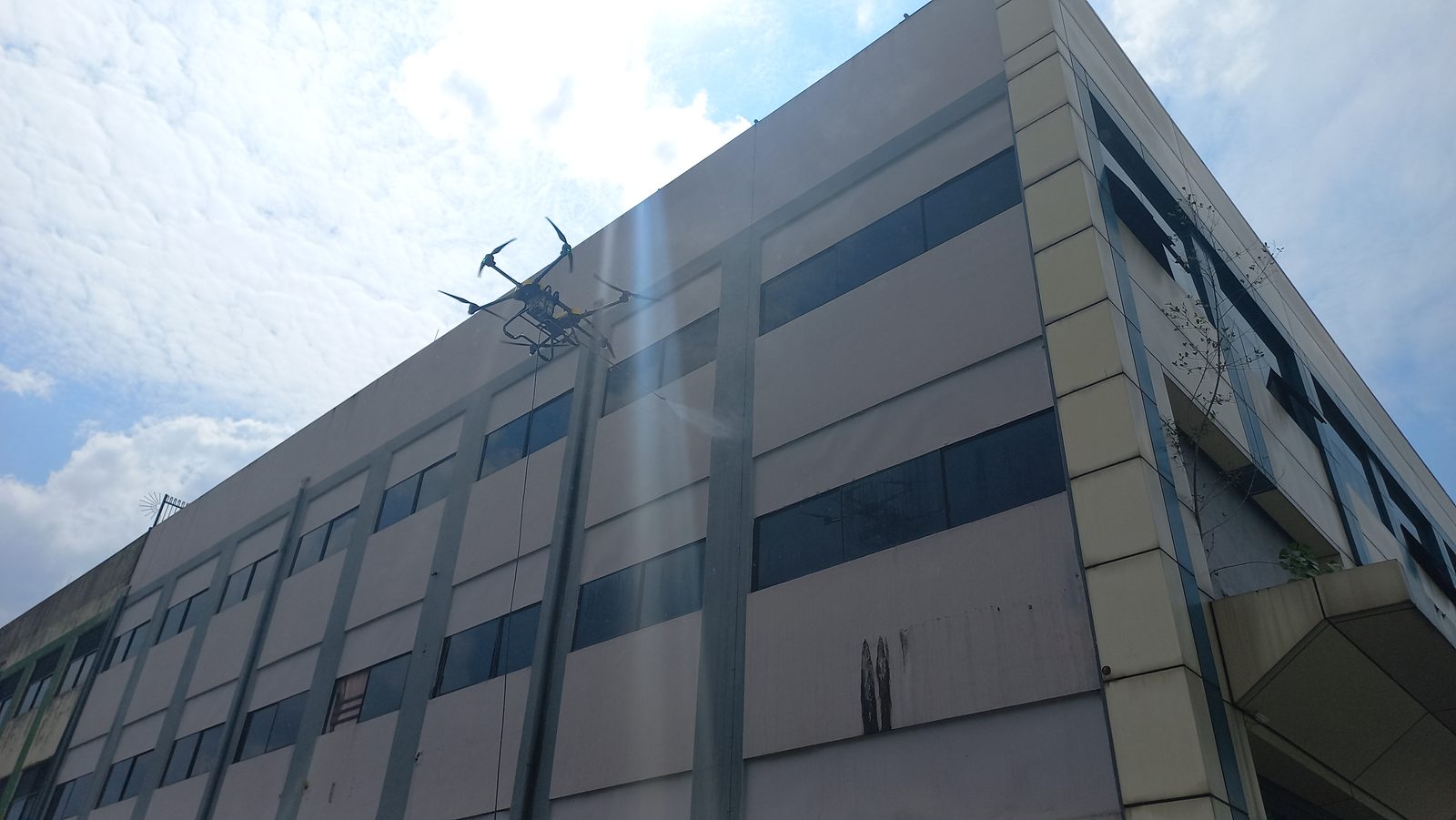
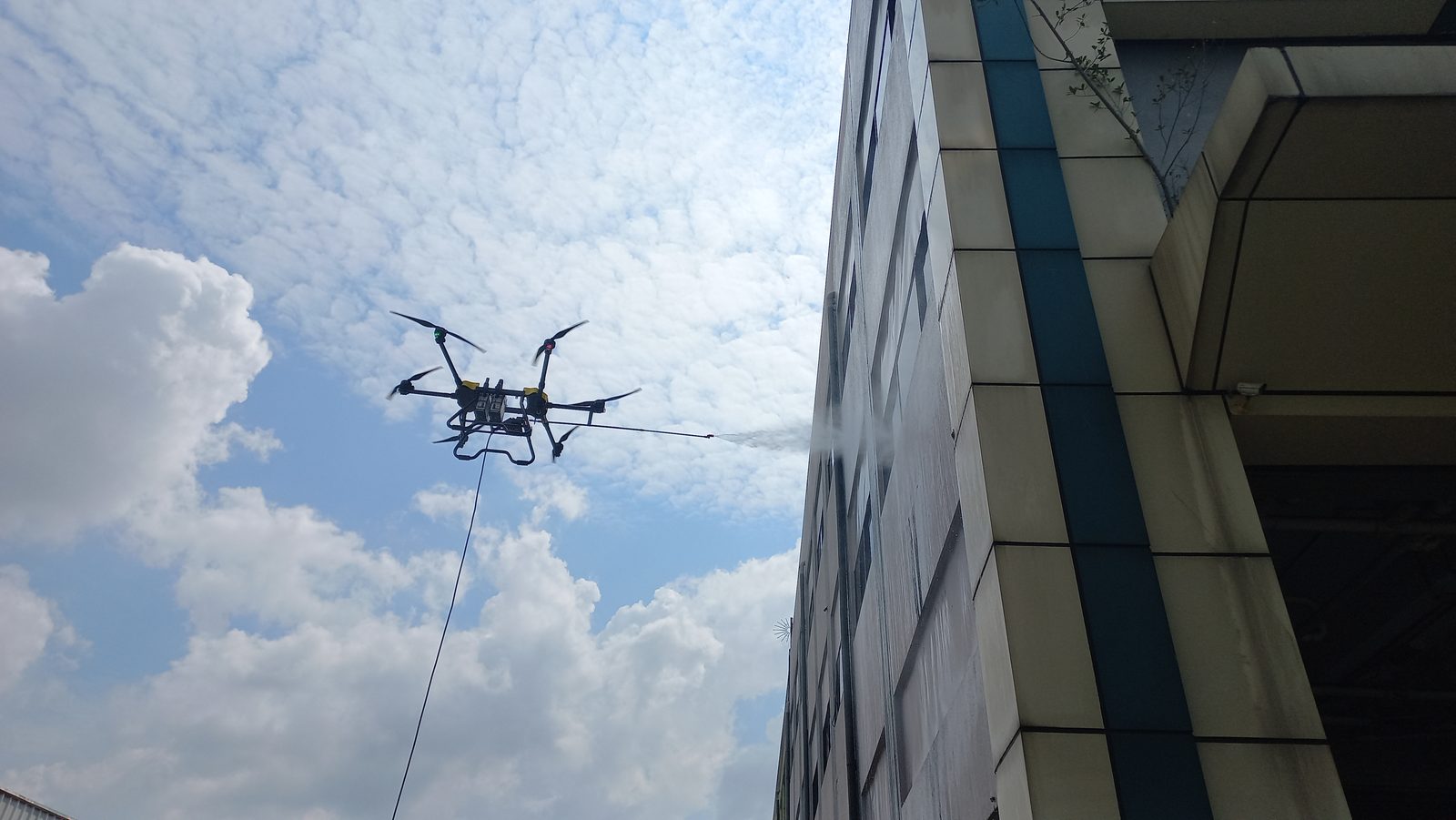
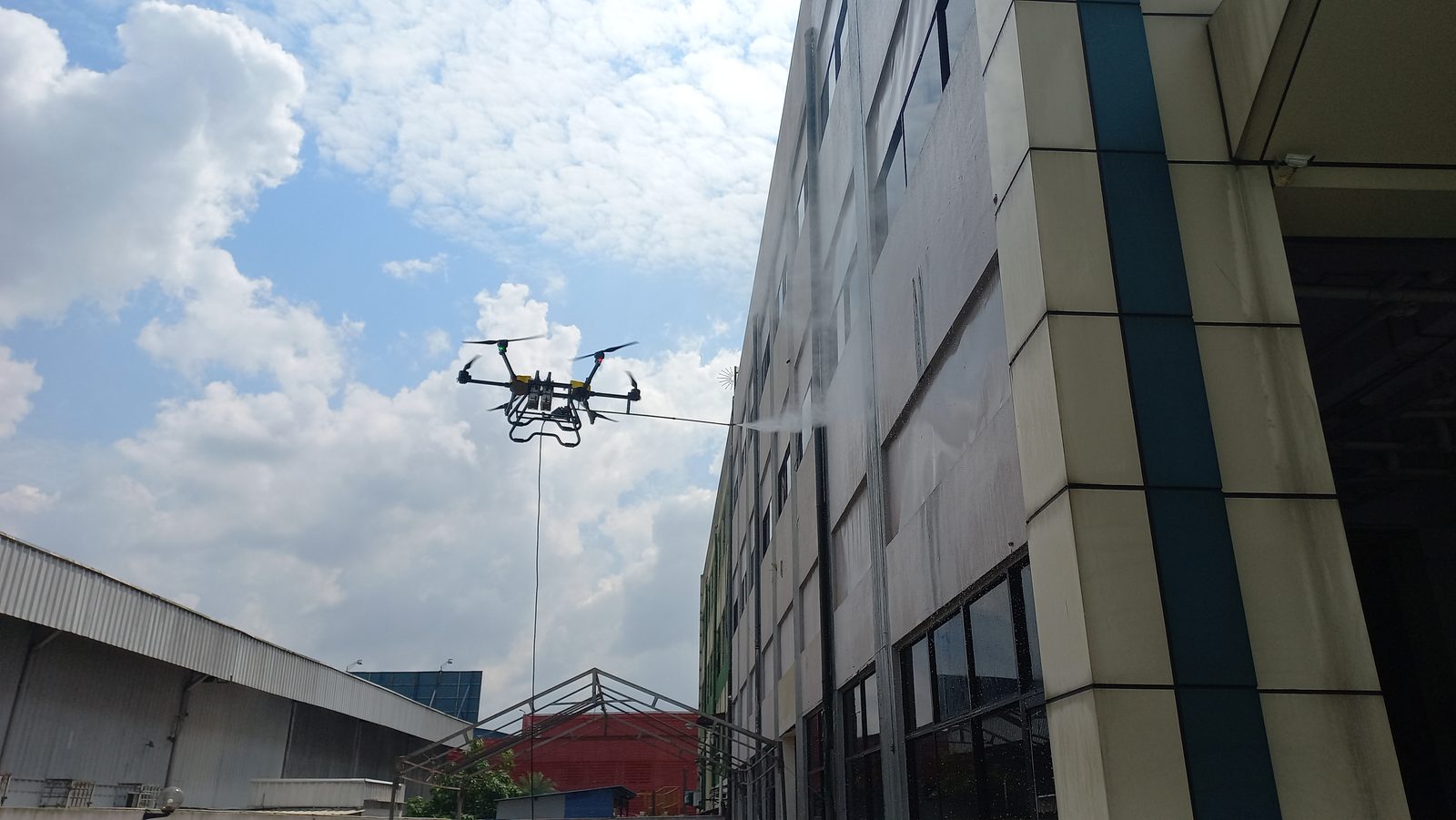
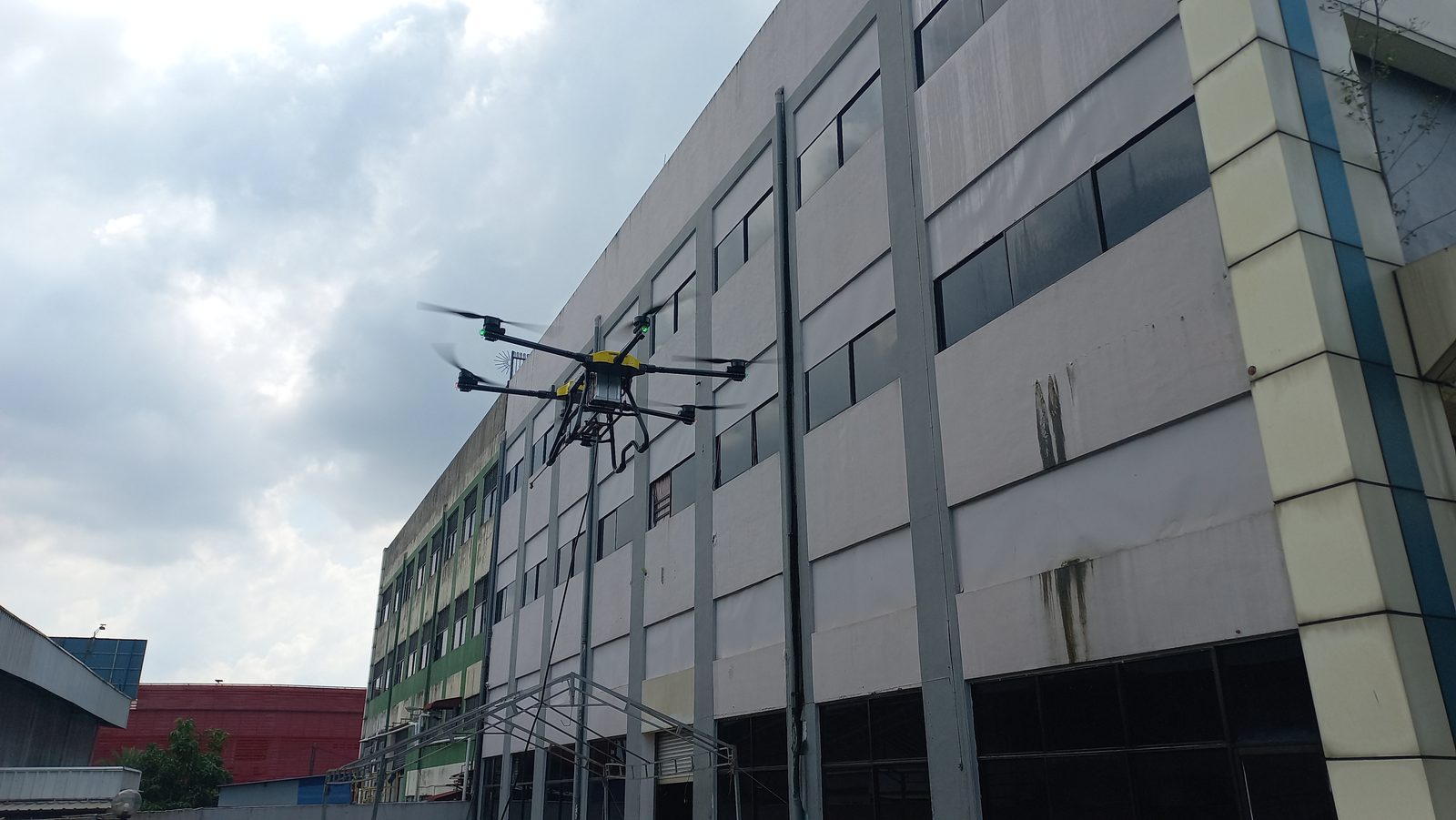
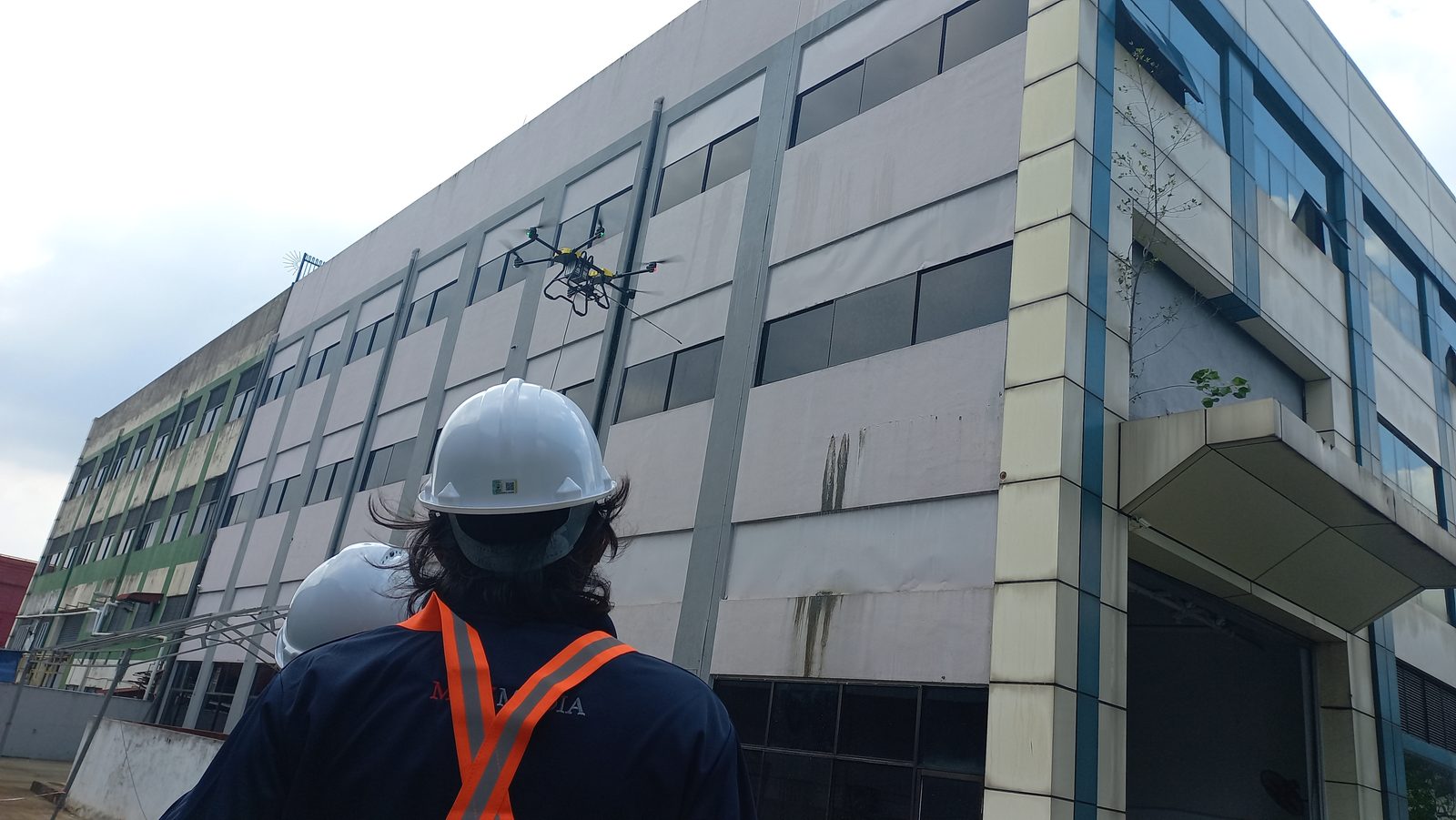
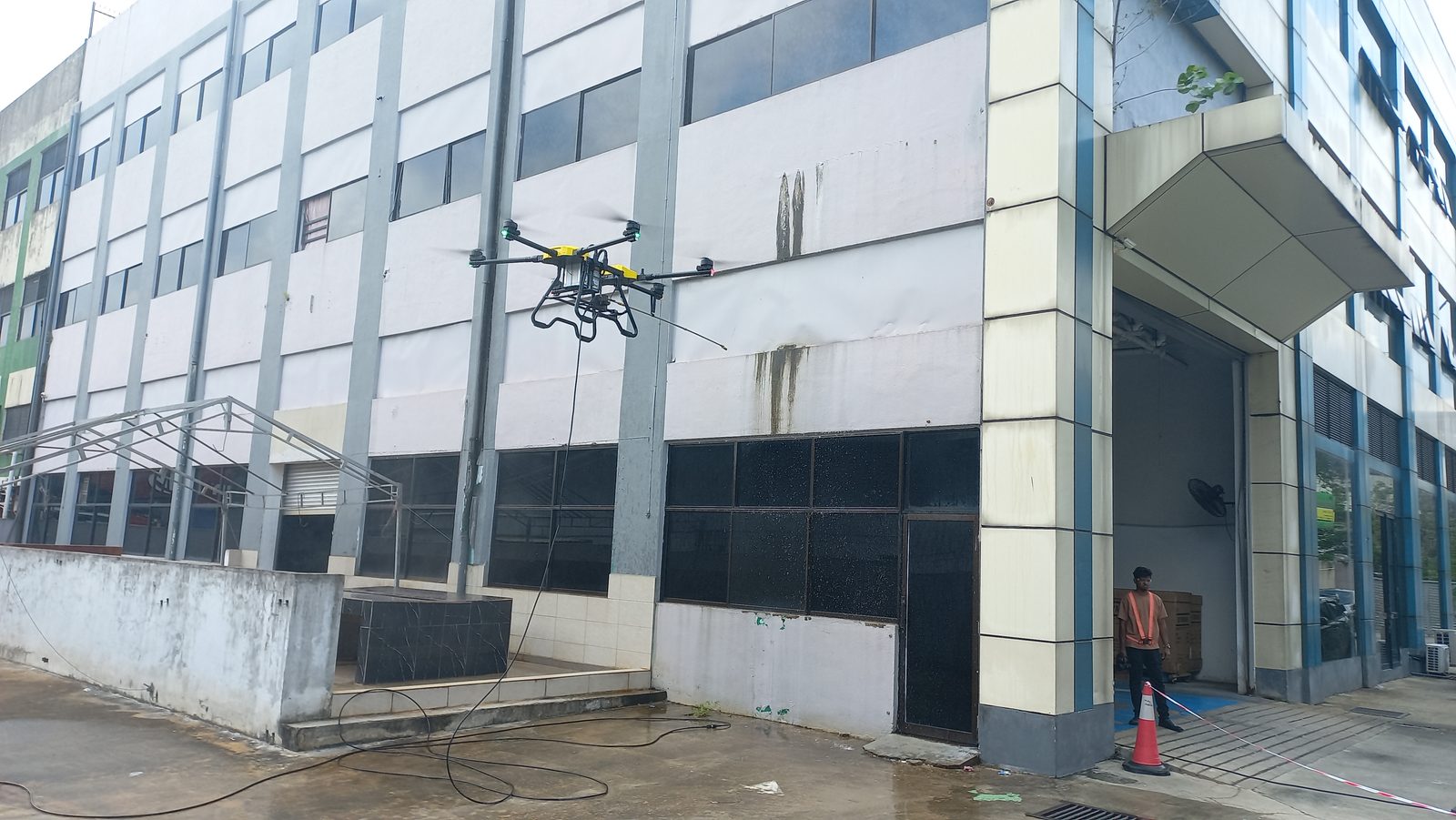
Education campus / building · HiiLSE Drone cleaning project evidence
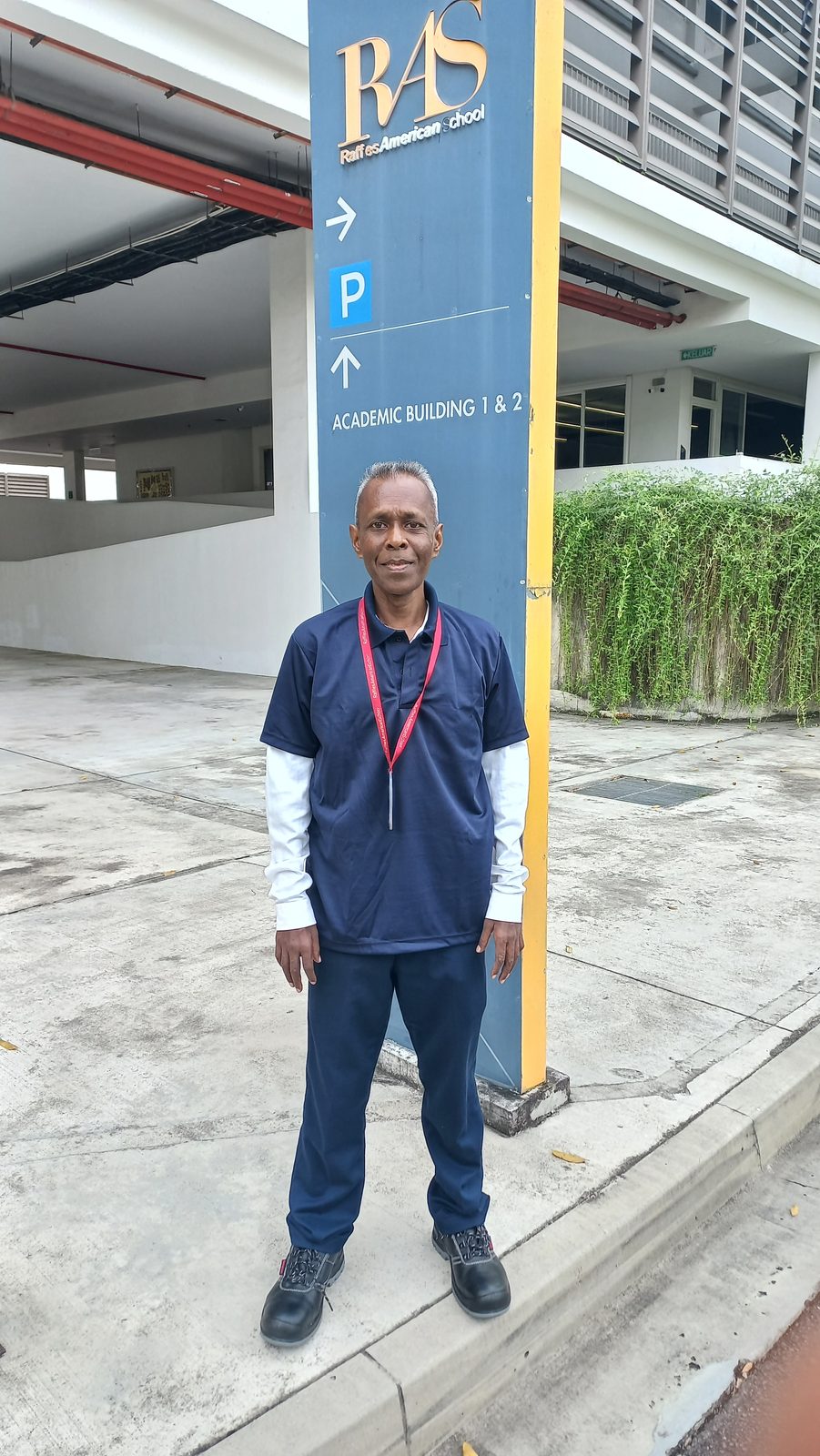
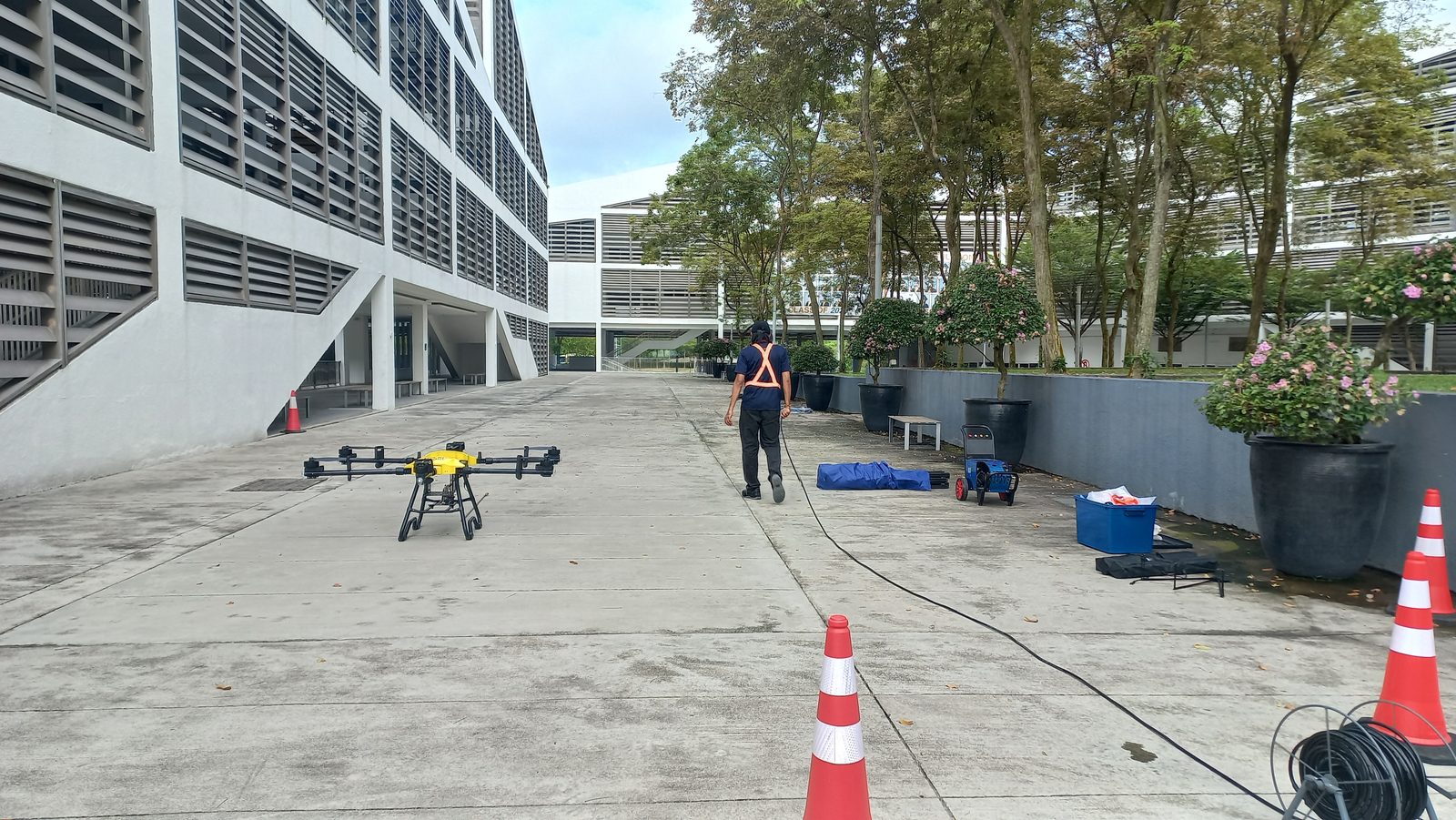
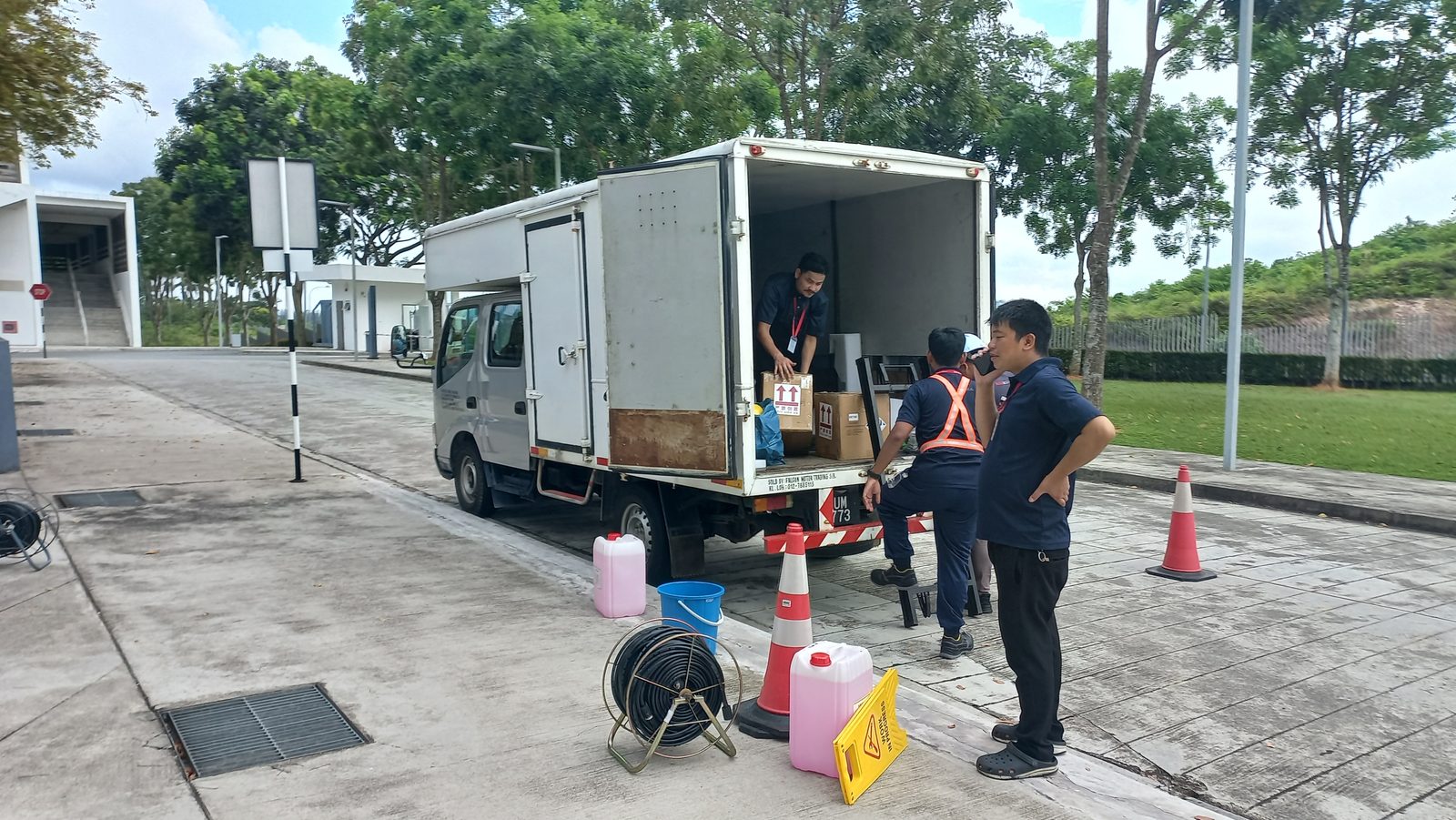
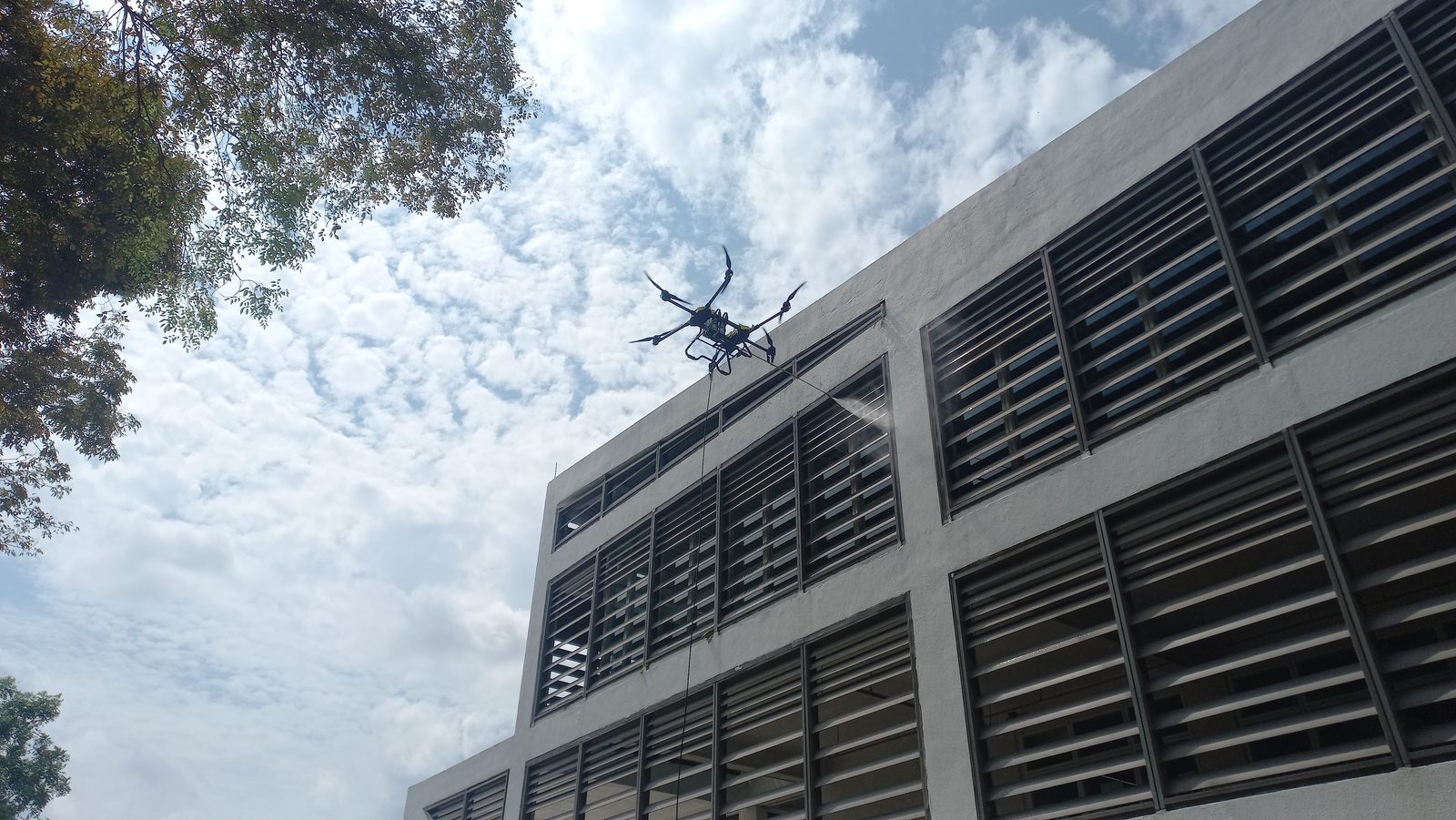
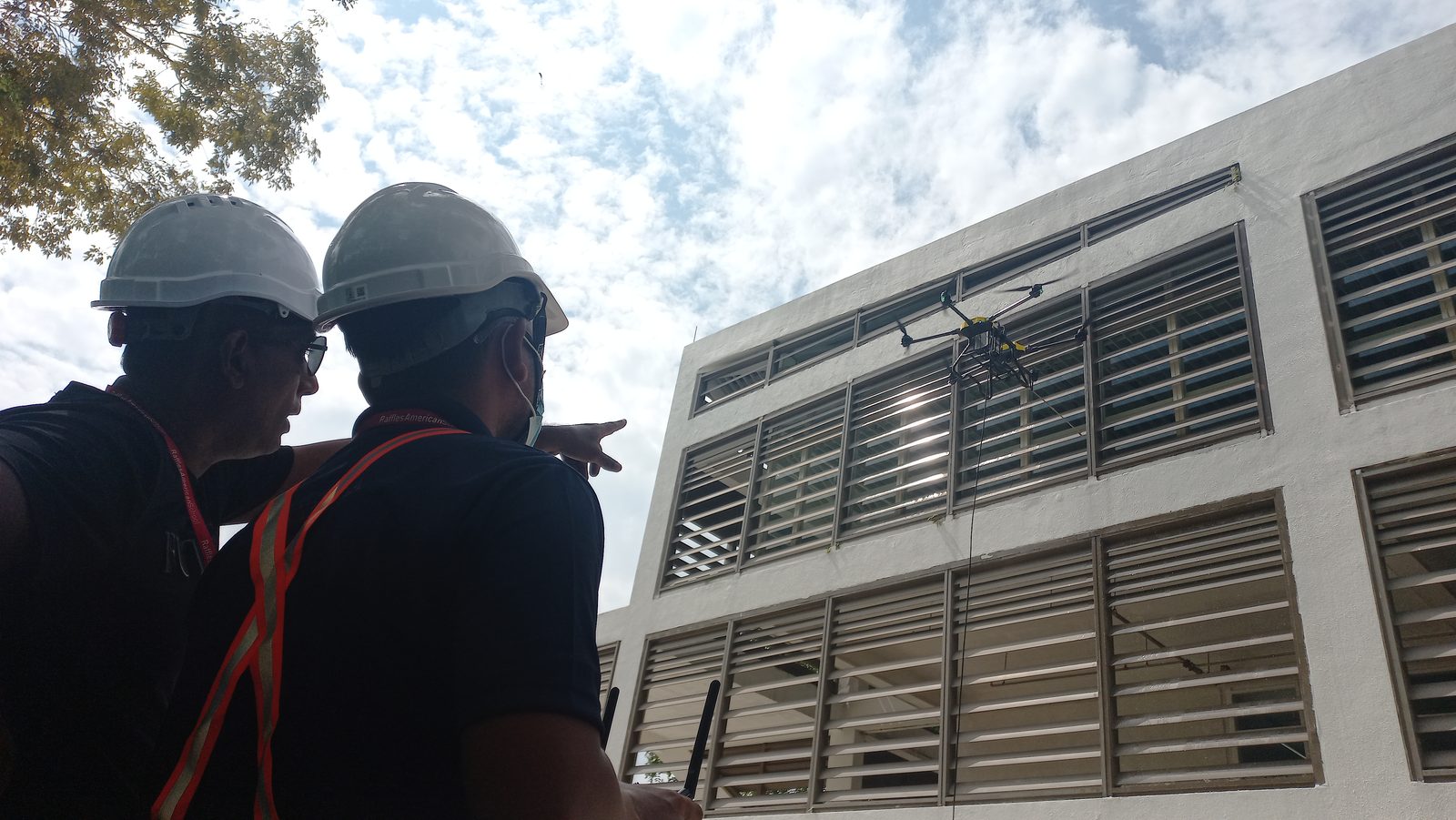
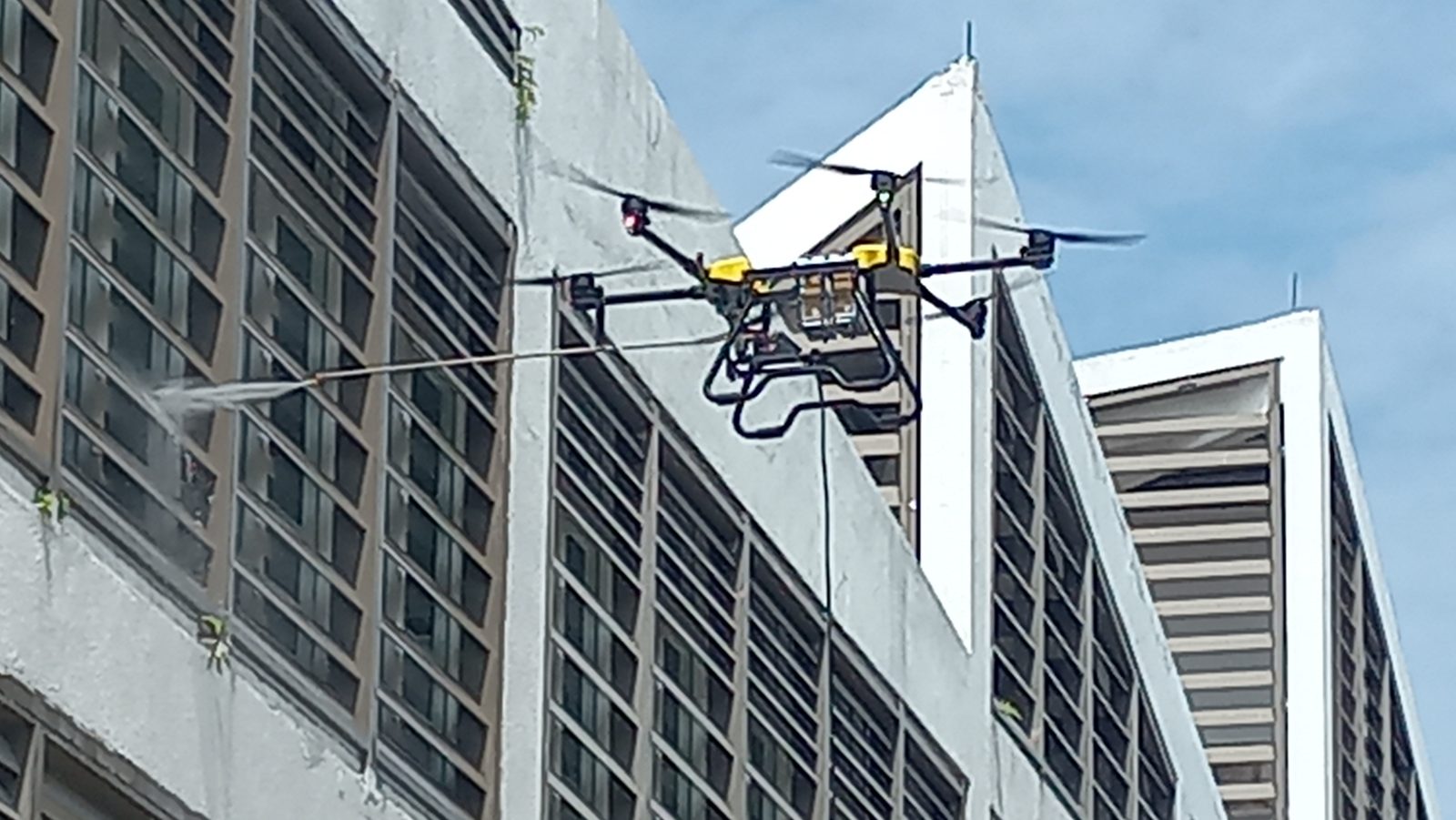
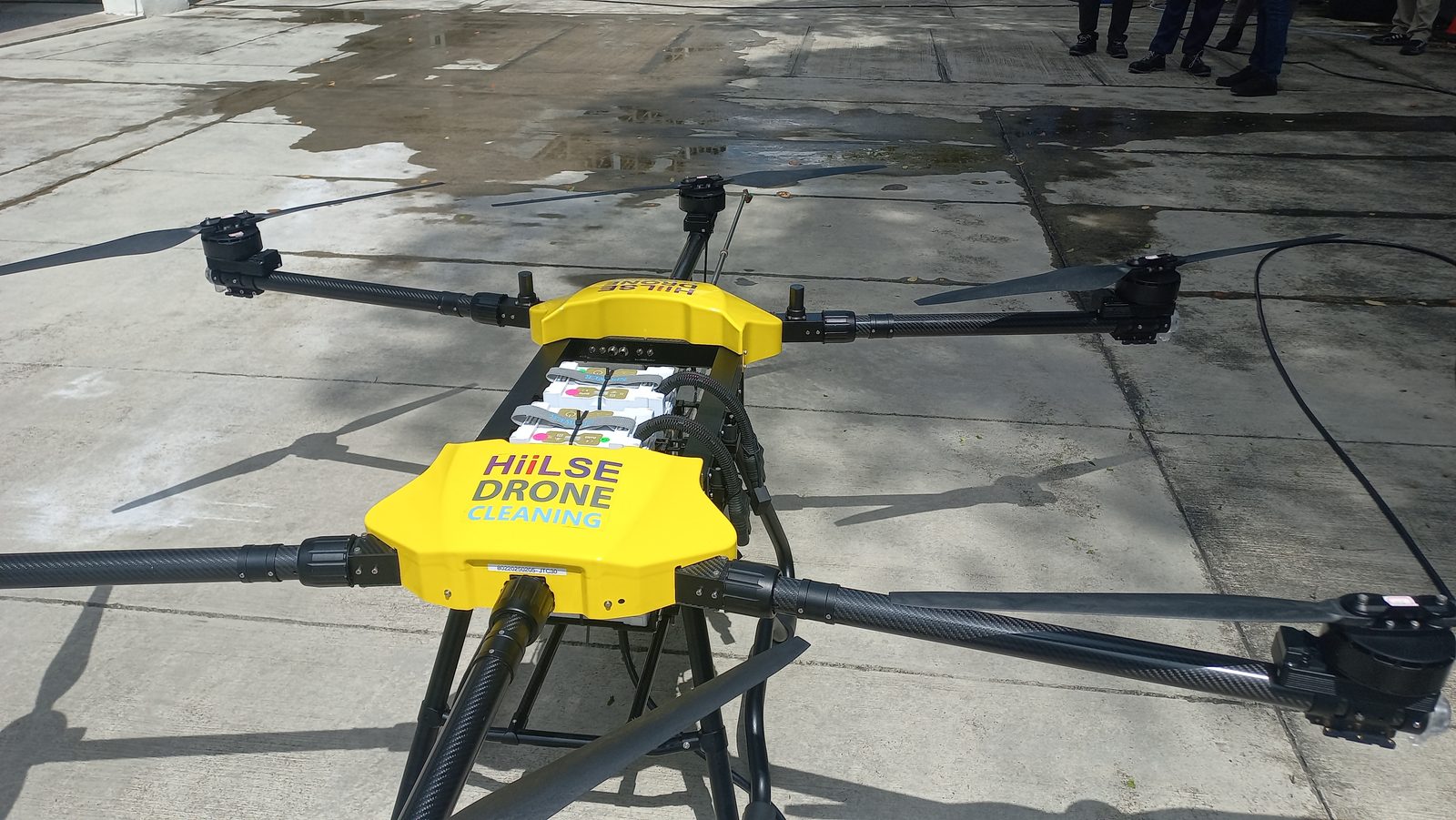
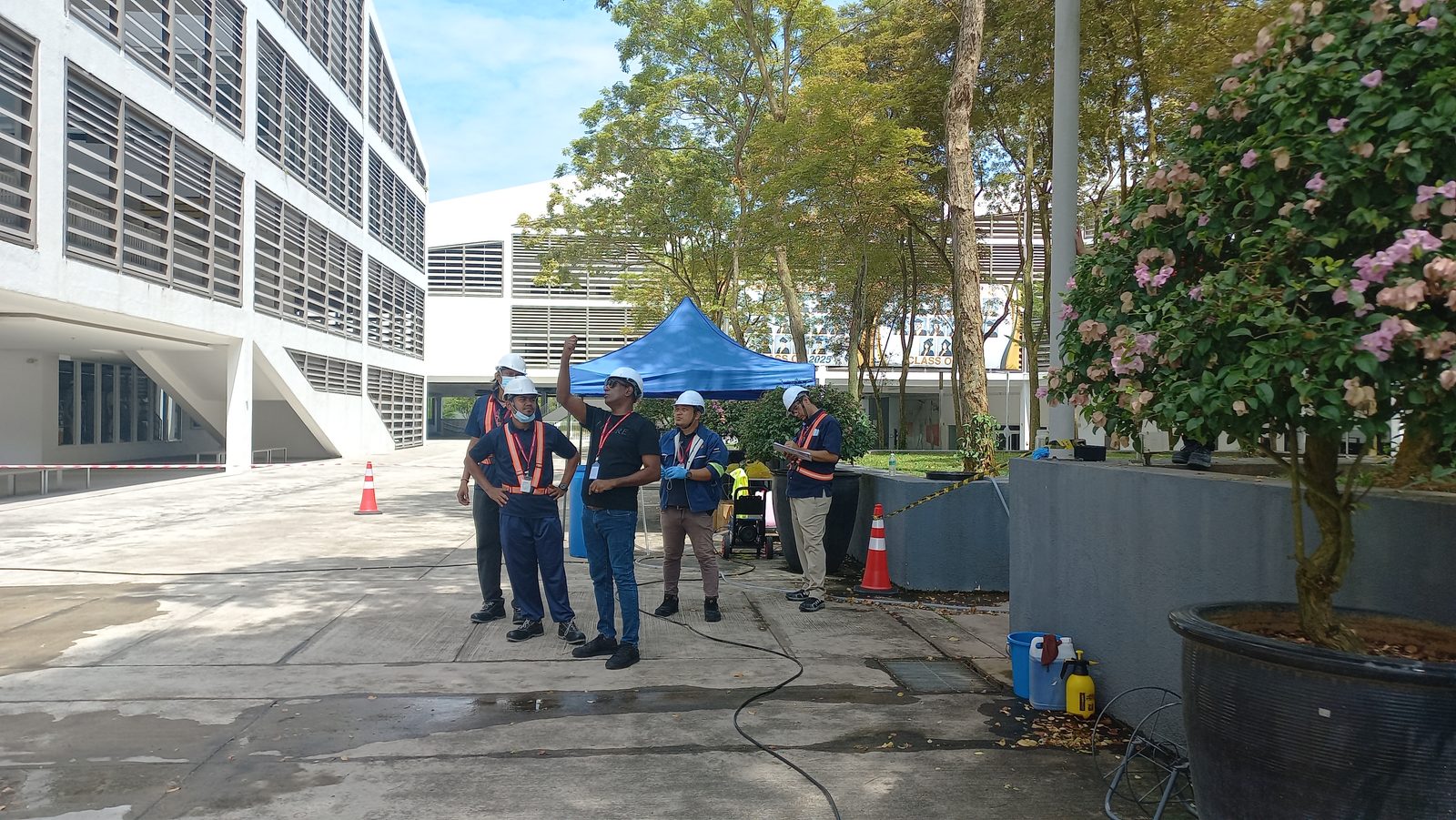
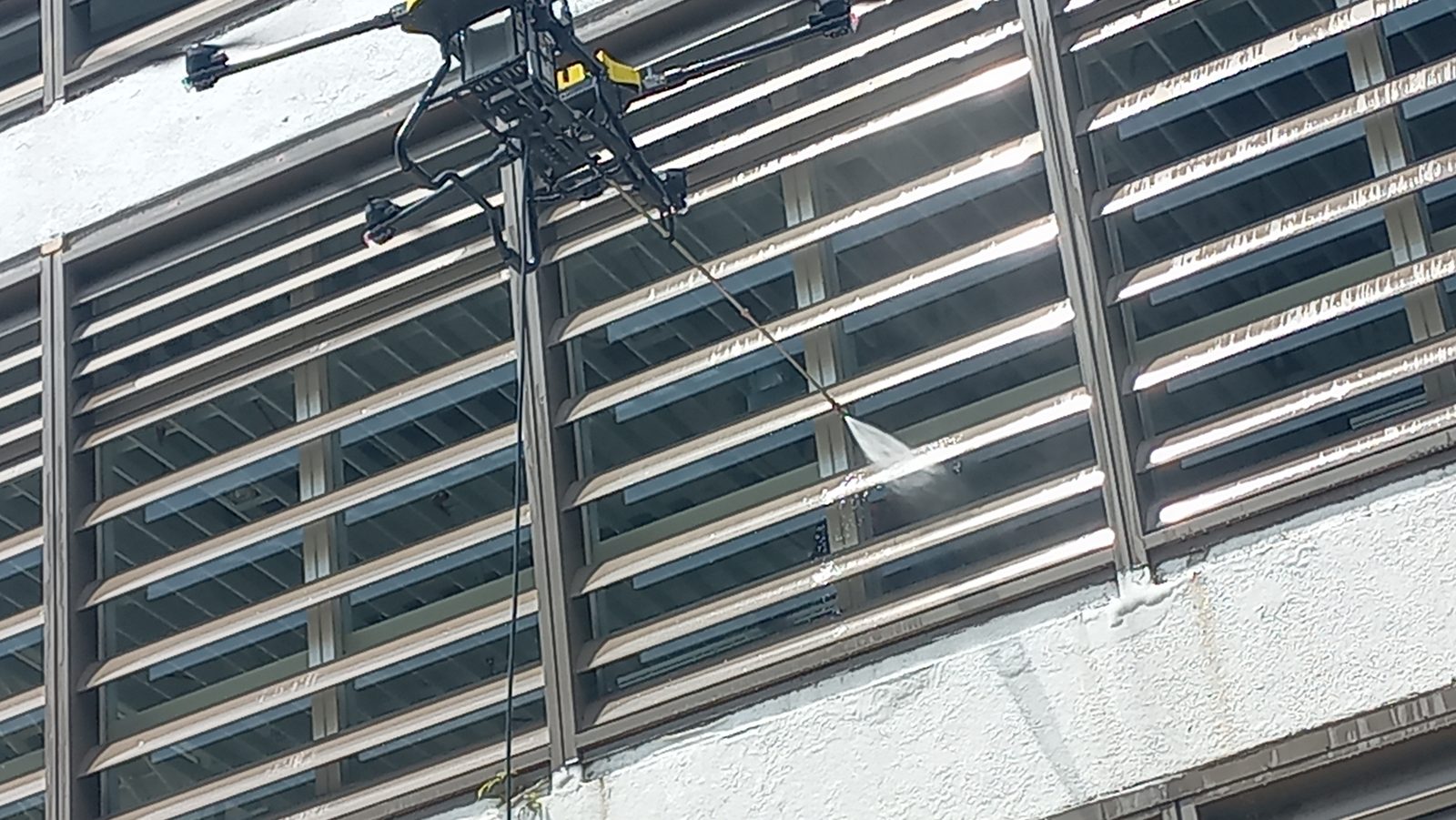
HiiLSE plans and executes illustrative cleaning missions for building facades, building envelope zones, container assets, roofs, solar panel farms, warehouses and other industrial surfaces. The public experience explains working height, authority-permit envelope, ground safety, water and chemical cycles, battery discipline and sensor-AI standoff protection.
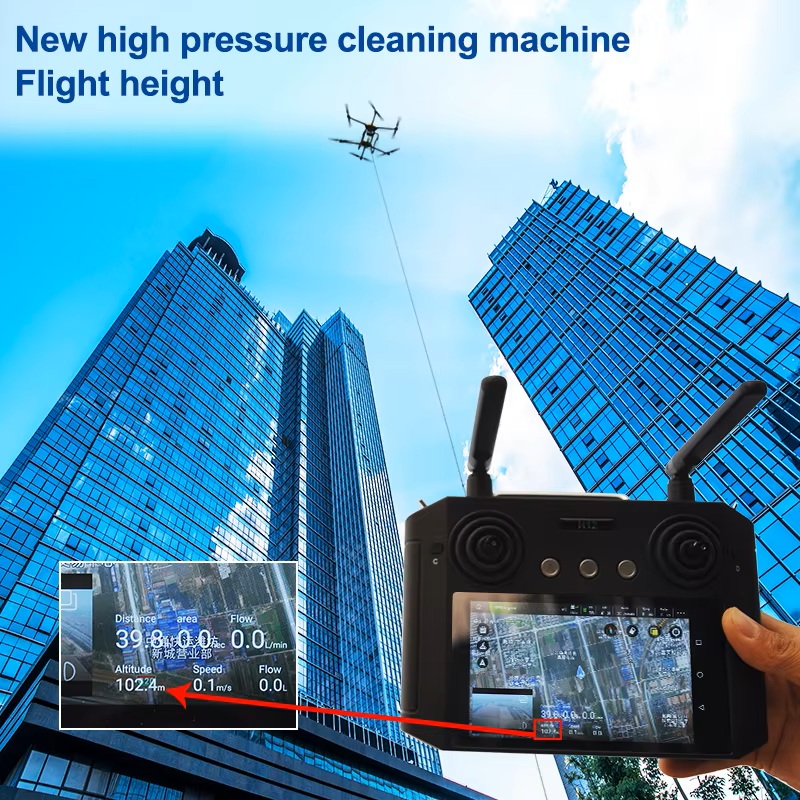
Approx. 30 storeys ≈ 100 m · approved to fly and clean facades/building envelope subject to authority permit and site approval.
Cleaning Facades and Building Envelope missions combine aircraft discipline with the correct ground support system. The illustrative logic below shows a ground-connected hose, pump, 3-tank system and battery rotation.
Ground pump pushes the selected fluid line to the aircraft spray system.
The drone lands when the active battery approaches its finishing threshold, then resumes with a fresh battery.
Forward movement is blocked when the structure is too close even if the pilot joystick requests more approach.
Public walking and other unrelated ground activity remain outside the controlled working perimeter.
Public illustrative simulation for Cleaning Facades, Building Envelope, Container, Roof, Solar Panel Farm, Warehouse and Industrial Facility operations. Real telemetry, permit documents and personalised mission records remain governed in WeR.
SIMULATION · Values, route, fluid levels, battery behaviour and safety intervention are illustrative. Technical capability, simulation thresholds and operating permission remain separate.
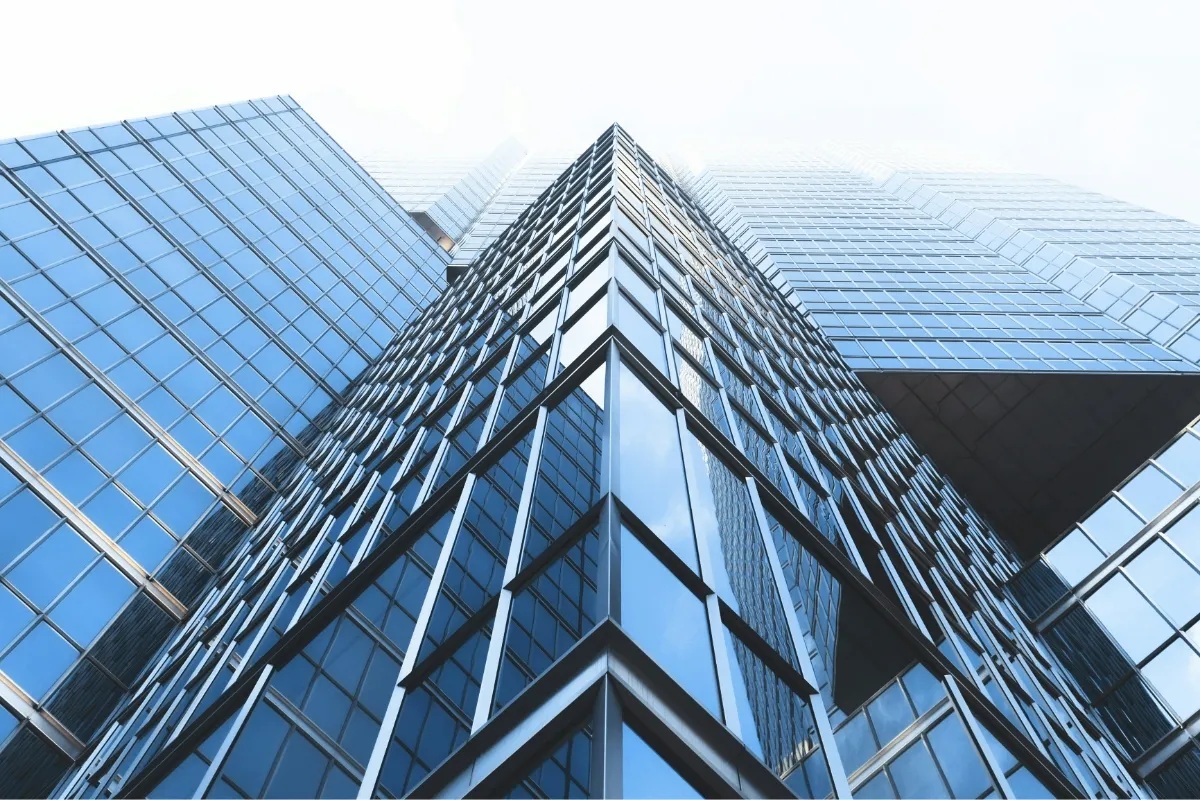
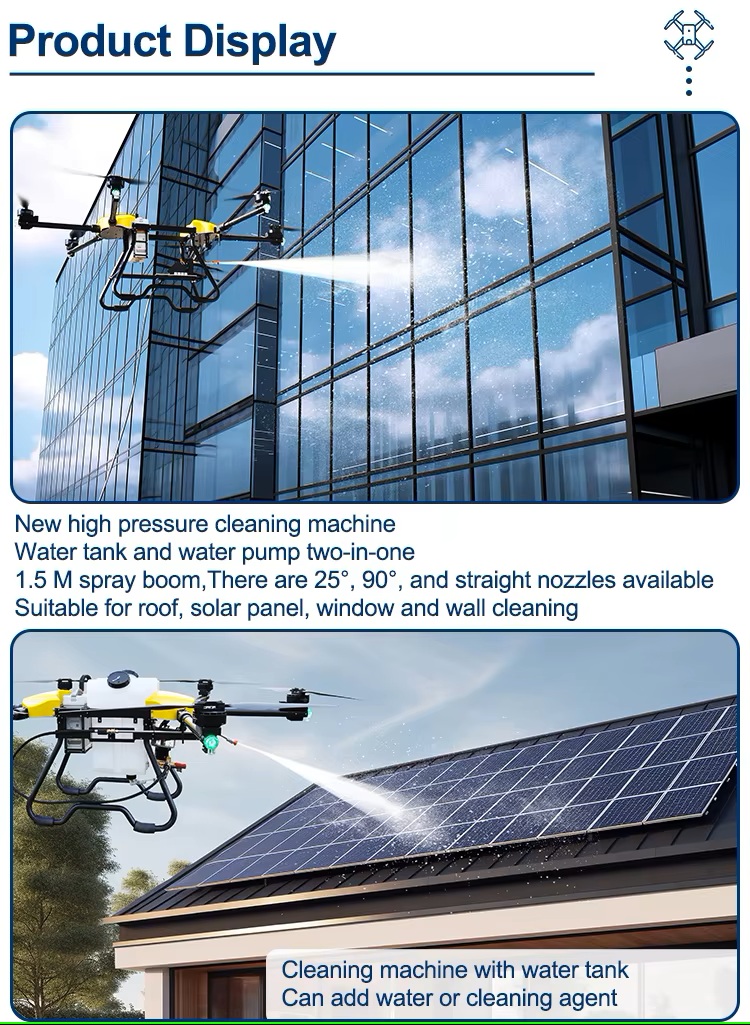
Building & façade; high rise window; solar panel; roof; bridge & infrastructure; water tank & structure; factory & warehouse; industrial facilities.
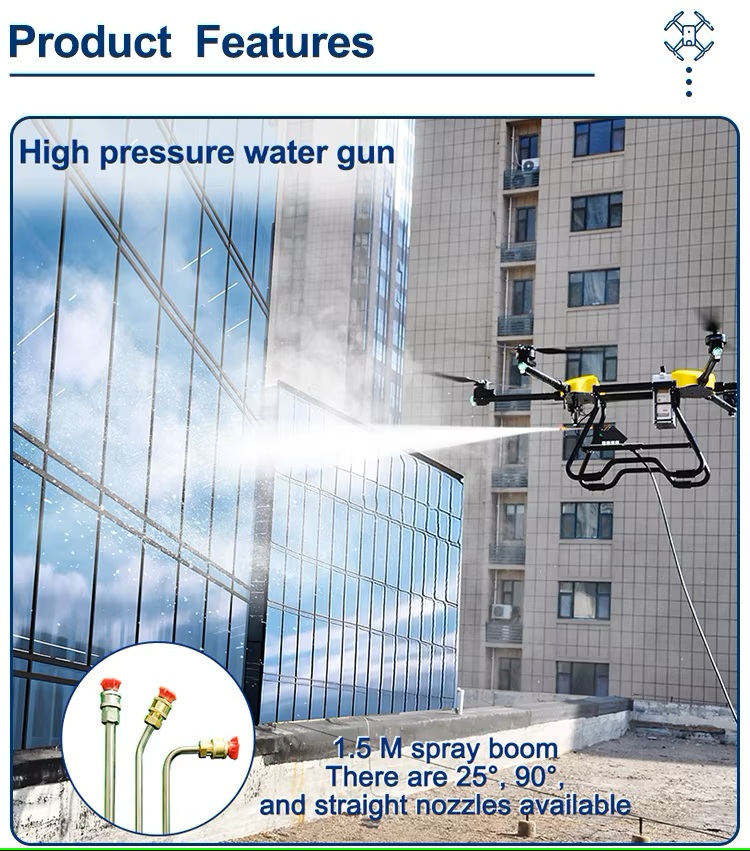
High pressure cleaning system; adjustable/retractable spray boom; multiple nozzle angles; FPV monitoring; RTK support where configured; obstacle awareness; smart battery.
Net weight 23.5 kg excluding battery and water pipe; take-off weight 41.1 kg with two batteries; maximum take-off weight 58.7 kg with two batteries and 160 m water hose; expanded 2000 x 1820 x 670 mm; folded 900 x 780 x 670 mm; flight altitude 0-150 m; climbing speed 5 m/s; water flow 14 L/min; wind resistance Level 7; reference spray washing area up to 1,200 m²/hour under stated source assumptions.
Enquiry ~ Discovery ~ Site Information ~ Site Assessment ~ Surface & Risk Review ~ Method Selection ~ Quotation through WeR ~ Operational Planning ~ Cleaning ~ Verification ~ Handover ~ Follow Up through WeR.
Before condition capture; controlled cleaning; post cleaning verification; before/after comparison; optional AI-assisted inspection; human technical review.
Browse compact evidence cards. Click or tap a card to open a larger controlled viewer with context and navigation.
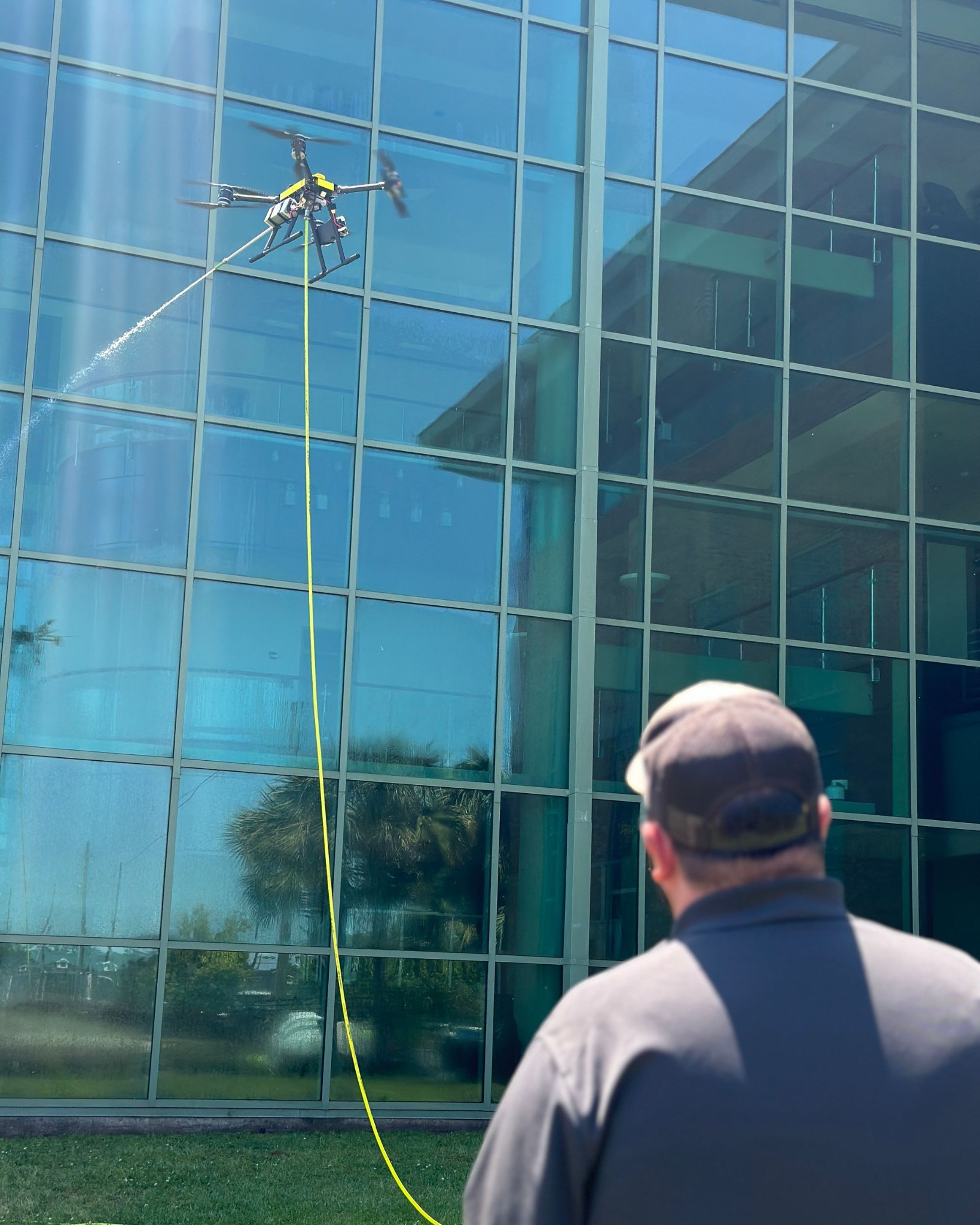



Explore three simplified cleaning missions before moving into registered advanced HiiLSE simulation environments.
SIMULATION / ILLUSTRATION · Public Lite demonstrates basic movement, cleaning progress and status only. Advanced configuration, saved missions, engineering controls and learner/project records require registered access on the applicable HiiLSE simulation pages.
Certification and approval marks are displayed only in the context of their supporting applicable records and evidence.
Placeholder logos maintain the approved section layout until actual media is uploaded and activated in CMS Admin.
View, print, share or request approved HiiLSE resources for this page as they become available.
Standby actions remain visible for planning but never open a broken or unfinished asset. Published resources become active only after CMS approval.